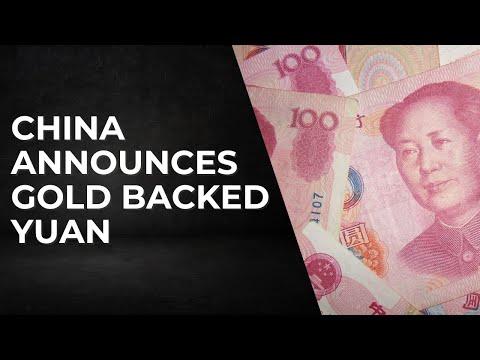
China has announced a significant development regarding its currency, the yuan, which is now backed by gold through new trading contracts and storage facilities in Hong Kong. This move is expected to enhance the yuan's internationalization and challenge the dominance of the US dollar in global trade.
In a surprising announcement, China has revealed that it is backing its currency, the yuan, with gold. This development, which many in the West may not fully grasp, has significant implications for global finance and trade. The announcement was made by the Shanghai Gold Exchange, which introduced new gold trading contracts and established designated gold storage facilities in Hong Kong.
On June 26, 2025, the Shanghai Gold Exchange announced the listing of new gold trading contracts accessible in Hong Kong, along with the establishment of designated warehouses for gold storage. This move is aimed at enhancing the openness of China's gold market to international participants, countering long-standing accusations of a closed market.
The introduction of gold-backed contracts signifies that the yuan is now a redeemable currency, allowing holders to exchange surplus yuan for gold. This development is crucial for international trade, as it provides an alternative for countries that may prefer holding gold over yuan.
China's move to back the yuan with gold is expected to facilitate its internationalization. As countries accumulate surplus yuan from trade with China, they can now convert these into gold, enhancing the appeal of the yuan as a reserve currency. This shift could lead to a decrease in demand for the US dollar, particularly as more nations seek to bypass the dollar in bilateral trade agreements.
Recent statistics indicate that over 52% of China's cross-border settlements are now conducted in yuan, surpassing the dollar's share of 43%. This trend reflects a growing preference for the yuan in international trade, driven by China's strategic partnerships with various nations.
Gold has long been viewed as a stable reserve asset. By allowing the yuan to be redeemable in gold, China positions itself favorably in the global financial landscape. This move not only enhances the yuan's credibility but also provides a hedge against inflation and currency devaluation, which are concerns for many countries.
As more nations adopt the yuan for trade, the US dollar may face increasing pressure. The implications of a gold-backed yuan could lead to a gradual erosion of the dollar's dominance as the world's primary reserve currency. This shift may force the United States to reconsider its economic strategies and relationships with other nations.
The introduction of a gold-backed yuan is not just a fleeting moment; it represents a significant shift in the global financial system. As countries become more comfortable with the yuan, we may see a rapid increase in its use for international transactions. This could lead to a re-evaluation of how currencies are perceived and utilized in global trade.
China's announcement of a gold-backed yuan marks a pivotal moment in the evolution of global finance. While the immediate effects may not be fully realized, the long-term implications could reshape the dynamics of international trade and currency valuation. As nations increasingly seek alternatives to the US dollar, the yuan's status as a credible and redeemable currency backed by gold could lead to a new era in global economic relations.
This development is a clear indication that the world is moving towards a multipolar financial system, where the yuan may play a central role in shaping future trade and investment patterns.