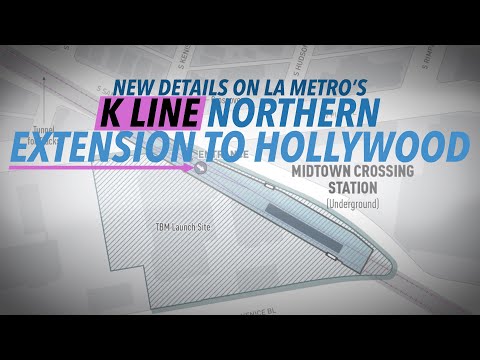
The K Line Northern Extension to Hollywood presents three main alignment options, each with distinct travel times, ridership projections, and construction timelines. The hybrid alignment, while the most expensive and time-consuming, is favored for its extensive service coverage. The project faces challenges related to funding, engineering complexities, and community impact, particularly concerning the proposed Hollywood Bull station.
The long-awaited draft environmental review for the K Line Northern Extension to Hollywood has finally been released, marking a significant step in the project’s development. With a public comment period open until September 5th, stakeholders are encouraged to engage with the proposed plans. This article delves into the details of the extension, including alignment options, projected ridership, construction timelines, and funding strategies.
The K Line Northern Extension presents three main alignment options:
Additionally, there is an optional Hollywood Bull station that could be integrated into any of the alignments. All proposed alignments feature fully grade-separated underground light rail systems.
Each alignment option has varying travel times and ridership projections:
Projected daily ridership figures are impressive:
The Hollywood Bull station is expected to add only 400 daily riders, raising questions about its necessity given the projected costs and complexities.
When analyzing new transit trips, the hybrid alignment shows a slight edge. The best-performing stations are primarily transfer stations, with the LaBrea-Beverly station on the hybrid alignment attracting significant ridership. Interestingly, individual station ridership tends to be lower on the hybrid alignment compared to the Fairfax alignment, suggesting that the hybrid option draws people to fewer stations but with higher overall demand.
Construction timelines vary significantly across the alignment options:
The addition of the Hollywood Bull station could extend the construction timeline by an additional year due to geological challenges in the area.
The estimated costs for each alignment are substantial:
These figures include a federally mandated 40% contingency. To initiate the project, approximately $4.66 billion is needed in today’s dollars, with potential federal matching funds.
Funding for the K Line Northern Extension relies heavily on an Enhanced Infrastructure Financing District (EIFD), which allows municipalities to borrow against future property tax gains driven by increased property values from the completed project. A study indicated that West Hollywood alone could raise $2.2 billion through a 75-year EIFD, with the potential for up to $22 billion if all relevant agencies collaborate.
The design of the K Line stations includes several key features:
The proposed Hollywood Bull station has sparked debate due to its projected low ridership and high construction costs. While it could serve as a significant asset for local residents, the geological challenges and financial implications make its inclusion uncertain.
Each alignment option presents unique advantages and disadvantages:
As the public comment period progresses, stakeholders are encouraged to voice their opinions on the proposed K Line Northern Extension. The complexities of funding, engineering, and community impact will play a crucial role in determining the future of this significant transit project. Engaging in this dialogue is essential to ensure that the final decision reflects the needs and desires of the community while addressing the pressing issues of cost and efficiency in public transit development.



