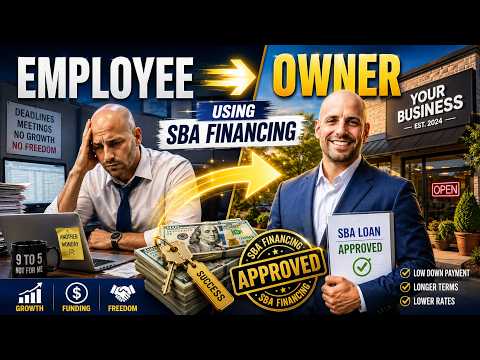
Many employees dream of owning a business but fear the risks involved. Instead of starting from scratch, buying an existing business or franchise with SBA financing offers a viable path. This article explores the benefits, considerations, and steps to strategically transition from employee to business owner with the right financing and planning.
Have you ever found yourself at work thinking, "I'm good at what I do and make a good living, but I don't know if I want to keep doing this forever?" Perhaps you've climbed the corporate ladder, earned the title, and receive a solid salary. Yet, deep down, you realize you're building someone else's dream — helping someone else grow their company and build equity. Each year, you trade more of your time for income. This situation is often referred to as the "golden handcuffs."
From the outside, everything may look great, but inside, you might wonder:
For many professionals, these questions spark the idea of business ownership. However, fear often follows:
These are smart questions because blindly quitting your job to start a business from scratch can be extremely risky.
Most people miss that starting from scratch is not the only way to become a business owner. Another path is to buy an existing business or invest in a proven franchise model. Instead of inventing the idea, creating the brand, building systems, finding customers, hiring a team, and figuring everything out on your own, you can step into a business where many of these pieces are already in place.
However, not every business is a good deal, which is why the process matters. The goal is not just to become a business owner but to become the owner of the right business — one that fits your skills, financial situation, lifestyle goals, and current skill set. It should be something where you have transferable experience and are coachable.
This is where SBA (Small Business Administration) financing can be a powerful tool. Many people think they need hundreds of thousands of dollars in cash to buy a business. While you do need money and must be qualified and prepared, SBA financing may allow a qualified buyer to purchase a business without paying the entire amount upfront.
Depending on the deal, SBA financing can help with:
Sometimes, seller financing can also be part of the structure.
This shifts the question from "Can I afford to buy a business?" to "What type of business could I qualify to buy, and what would the right financing structure look like?" This is a much more useful conversation.
Financing is only one piece of the puzzle. Just because you can get financing doesn't mean you should buy the business. You need to understand:
Coaching and due diligence are crucial. The worst mistake is falling in love with a business before understanding if it fits you and if it is a good business.
If you haven't owned a business or reviewed financials before, there's a lot to learn. Before looking at deals, you need a "buy box" — a clear target of what kind of business you are looking for. Consider:
Knowing your buy box helps you avoid chasing every shiny object and approach business ownership strategically.
Once your buy box is defined, build your financing plan by reviewing:
Talk to SBA bankers or brokers to understand what type of deal may be financeable based on your situation and transition plan.
The goal is not to wake up one day, quit your job, and hope it works out. Instead, move with a plan that includes:
Imagine 12 months from now, instead of sitting in another meeting you don't want to be in, you're building something for yourself and your family. You're making decisions, creating value, building equity, and working on an asset rather than just earning a paycheck. The work feels different because it's connected to your future.
Employee income can pay the bills and build a 401(k), but ownership can build wealth. With the right business, financing, and guidance, the transition may be more realistic than you think.
If you're a corporate professional, W-2 employee, manager, executive, or salesperson thinking about business ownership, the first step is not quitting your job. The first step is getting educated. Understand what you might qualify for, what type of business could be a good fit, and what a smart transition plan looks like.
Consider booking a discovery call with experts who can guide you through the path from employee to owner. They can help you assess your goals and provide tools and assessments to determine the best business fit.
Transitioning from employee to business owner is a journey that requires education, planning, and the right financing. With these elements in place, you can build a future where you own your income and wealth.










