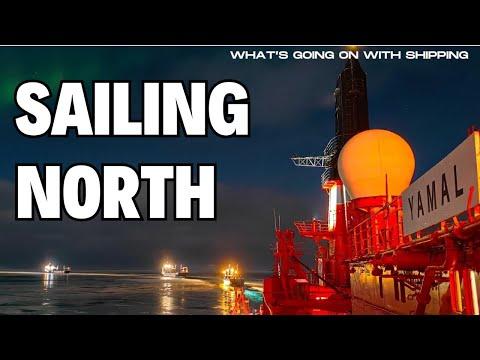
In 2023, Russian and Chinese shipping along the Northern Sea Route saw a significant increase, with nearly 100 transits and a cargo volume of 3 million tons. This trend highlights the route's growing importance amidst geopolitical tensions and climate change, as it offers an alternative to traditional shipping lanes.
On today's episode of what's going on with shipping, we delve into the remarkable increase in Arctic shipping activity involving Russian and Chinese vessels. Despite facing extensive Western sanctions, Russia has managed to boost its Arctic transit cargo by nearly 50% in 2023. This surge is primarily observed along the Northern Sea Route (NSR), which recorded 97 transits carrying close to 3 million tons of cargo, surpassing previous records.
The Northern Sea Route is becoming a vital shipping lane for both Russia and China. According to a report from Nord University in Norway, the total cargo volume along this route, including transits and traffic originating in Russia, is projected to reach around 40 million tons in 2024. This blog post will break down the latest data and explore the implications of this trend.
The report from Nord University, specifically from their Center for High North Logistics, utilized data collected via the Automated Information System (AIS) and the Clarkson Fleet database. By mid-November, it was reported that 3.8 million tons of transit cargo had been transported, equating to 97 voyages—56 with cargo and 41 in ballast. This marks the highest level of activity in the past 15 years.
The transit voyages can be categorized into three main directions:
Notably, the majority of cargo transported was from Russia to China, accounting for 95% of the total cargo volume, which amounted to 2.9 million tons. In contrast, only about 4% (0.12 million tons) was moved in the opposite direction.
The primary types of cargo transported along the Northern Sea Route include:
Ice conditions play a crucial role in navigation along the Northern Sea Route. The report outlines various ice conditions experienced from August to October 2024, ranging from heavy ice to open water. Russia's fleet of icebreakers, including three nuclear-powered vessels, has been actively escorting convoys through these challenging conditions.
While the current cargo volumes may seem impressive, they represent a small fraction of global shipping. However, the Northern Sea Route offers a strategic alternative to traditional shipping lanes, potentially avoiding major choke points such as the Straits of Tushima and the South China Sea. As geopolitical tensions rise, shipping firms may reconsider their stance on using this route.
Despite the advantages, the Northern Sea Route is not without its challenges. Environmental concerns, including pollution and the impact of climate change, pose significant risks. The International Maritime Organization (IMO) has strict regulations regarding emissions in the Arctic, and ships must comply with ice-strength requirements to ensure safe navigation.
The increase in Arctic shipping activity along the Northern Sea Route highlights a significant shift in global trade dynamics. As Russia and China continue to develop this route, it may become an increasingly viable option for international shipping, particularly in light of geopolitical uncertainties. However, the route's viability will depend on ongoing environmental conditions and regulatory frameworks.
In summary, the Northern Sea Route is poised to play a crucial role in the future of global shipping, offering an alternative that could reshape trade routes in the Arctic region.