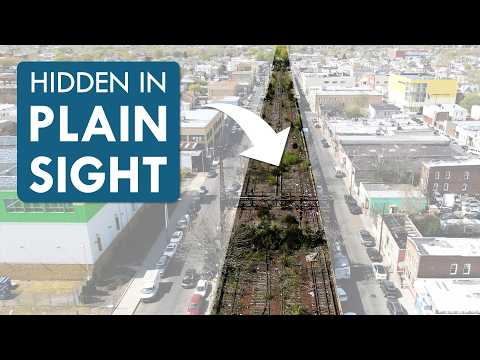
Queens Link proposes to restore rail service on the abandoned Rockaway Beach Branch line in Queens, New York, addressing significant transit needs while promoting walking, biking, and economic development. This blog post explores the project's potential benefits, challenges, and the political landscape surrounding it.
In today's discussion, we delve into a controversial yet compelling thesis: the infrastructure and right-of-way designed for rail transit are immensely valuable and should be utilized effectively. This is particularly true in certain parts of Queens, New York City, where there are significant transit needs and vast barren spaces within the MTA subway network.
Queens Link is an initiative aimed at restoring train service on the long-abandoned Rockaway Beach Branch line, which once connected the Rockaway area to central Queens. The proposal includes not only the restoration of rail service but also the creation of new spaces for walking, biking, and recreation along the right-of-way.
The Queens Link plan suggests diverting the M train from its current route under Queens Boulevard to run south to the Rockaways, adding four new stations along the way. This contrasts with a competing proposal known as Queens Way, which aims to transform portions of the abandoned line into a linear park without any transit service, similar to the High Line in Manhattan.
The need for improved transit in this part of New York City is urgent. The existing infrastructure was built for a reason, and the abandoned alignment could seamlessly integrate into the current network. The tour of the Queens Link alignment began at the southern end of the abandoned section, accessible via the A train to Rockaway Boulevard station. The area is characterized by a lack of north-south rail connections, forcing residents to rely on buses and cars to navigate the borough.
As we explored the alignment, it became evident that the Rockaway Beach Branch line is in disrepair, with sections overgrown and used as dumping grounds. However, the potential for revitalization is significant. The Queens Link proposal emphasizes the need to rebuild the viaduct to support both heavy rail transit and pedestrian pathways, capitalizing on the existing right-of-way and urban context.
Restoring rail service on the Rockaway Beach Branch could have far-reaching effects. It would connect major employment centers, such as the Aqueduct Racetrack and the logistics operations around JFK Airport, to the rest of Queens and Brooklyn. This connectivity is crucial for enhancing ridership and improving access to jobs.
Queens Link is not just about adding four new stations; it represents a broader enhancement of the transit network. By improving connections between various lines, it would increase the overall efficiency of the MTA system. For instance, rerouting the M train could alleviate congestion at Forest Hills 71st Avenue, potentially restoring G train service to Forest Hills from Brooklyn.
The Queens Link organization has received a $400,000 grant from the U.S. Department of Transportation's Reconnecting Communities program to study the project's impacts. However, they need to raise an additional $100,000 to access these funds. Despite the political landscape shifting with new administration priorities, grassroots support for Queens Link remains vital.
In light of potential federal funding challenges, it is crucial for community members and advocates to rally around the Queens Link initiative. Promoting good ideas and investing in urban infrastructure is essential, especially when political support may wane. The grassroots movement can play a pivotal role in ensuring that projects like Queens Link receive the attention and funding they deserve.
The Queens Link proposal represents a significant opportunity to revitalize an underutilized transit corridor in New York City. By restoring rail service on the Rockaway Beach Branch, we can address pressing transit needs, promote economic development, and enhance the quality of life for residents. As we continue to advocate for this project, it is essential to recognize the broader implications of investing in our urban infrastructure and the importance of community support in driving these initiatives forward.



