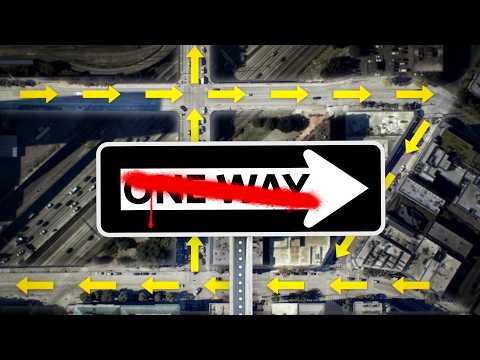
This article explores the drawbacks of one-way streets, including their impact on traffic flow, safety, and economic vitality. It argues for the benefits of converting to two-way streets, highlighting studies that show improved connectivity and reduced danger for pedestrians and cyclists. While some one-way streets may serve specific purposes, the overall trend favors two-way systems for healthier urban environments.
One-way streets are a common feature in many downtown areas across the United States, including St. Louis Abyispo, where I currently reside. Having previously lived in Sacramento, California, I have experienced firsthand how cities often organize their traffic flow around one-way street systems. These streets were originally designed for two-way traffic but were converted to facilitate faster movement of vehicles. However, this article will delve into the arguments against one-way streets and advocate for a return to two-way traffic systems.
One-way streets were primarily introduced to enhance traffic flow, allowing cars to move more quickly through urban areas. They were particularly popularized during the rapid highway construction era of the 1940s and 1950s, serving as surface-level extensions of highways. The idea was to streamline traffic by reducing the complexity of intersections and optimizing traffic signal programming.
However, this assumption that one-way streets inherently improve traffic efficiency is increasingly being challenged. Research indicates that while one-way streets may facilitate faster travel during peak congestion, they can also create longer detours for drivers, leading to increased travel times in many scenarios.
One of the most significant concerns regarding one-way streets is their impact on safety. Studies have shown that these streets can lead to higher speeds, which in turn increases the likelihood and severity of collisions. This is particularly dangerous for pedestrians and cyclists, who are already vulnerable on the roads. The design of one-way streets often encourages dangerous behaviors, such as contraflow cycling, which can lead to accidents.
Research has also indicated that one-way streets can have detrimental effects on local economies. Areas with one-way street systems often experience lower property values and higher crime rates. For instance, a study conducted in Louisville, Kentucky, found that neighborhoods with one-way streets were typically located in low-income areas with higher unemployment rates. This correlation suggests that one-way streets may contribute to economic decline by reducing connectivity and accessibility.
Contrary to popular belief, one-way streets do not always provide the most efficient traffic flow. A study comparing one-way and two-way streets found that two-way streets are generally better for short trips, allowing for more direct routes without unnecessary detours. In contrast, one-way streets can complicate navigation, forcing drivers to take longer paths to reach their destinations.
Converting one-way streets back to two-way operation can significantly improve connectivity within urban areas. Two-way streets allow for more route options, which can alleviate congestion and provide drivers with alternative paths during peak traffic times. Additionally, two-way streets tend to create safer environments for pedestrians and cyclists, as they reduce the speed of traffic and the number of conflict points at intersections.
Cities that have made the switch from one-way to two-way streets often see positive economic outcomes. By improving accessibility and safety, these conversions can attract more foot traffic and encourage local businesses to thrive. The revitalization of neighborhoods through two-way street systems can lead to increased property values and a reduction in crime rates.
While the arguments against one-way streets are compelling, there are instances where they may serve a purpose. For example, in St. Louis Abyispo, a narrow avenue called Garden Street was converted to a one-way street to facilitate more cafe seating and angled parking. In this case, the one-way design has slowed traffic and created a pleasant environment for pedestrians without completely eliminating vehicle access.
In summary, while one-way streets may have been designed with the intention of improving traffic flow, the evidence suggests that they often do more harm than good. The drawbacks, including increased danger for pedestrians and cyclists, negative economic impacts, and inefficient traffic patterns, make a strong case for converting these streets back to two-way operation. Cities should consider these conversions not only to enhance safety and connectivity but also to foster economic growth and community vitality. If you find yourself in a community with problematic one-way streets, advocating for their conversion could lead to a more vibrant and safer urban environment.



