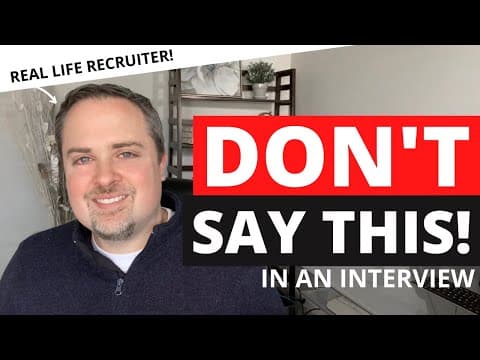
In job interviews, certain phrases can significantly hinder your chances of success. This article outlines ten specific things you should never say during an interview, including asking about the company's core business, salary expectations, and expressing excessive nervousness. Understanding these pitfalls can help you present yourself as a well-prepared and engaged candidate.
Landing a job interview is a significant achievement, but it can also be a nerve-wracking experience. The stakes are high, and saying the wrong thing can lead to rejection. As a corporate recruiter, I want to share ten phrases and questions you should avoid during your interview to increase your chances of success.
One of the biggest red flags in an interview is asking the interviewer what the company does. By the time you reach the interview stage, you should have a solid understanding of the company's core business, products, and competitors. Failing to do this basic research suggests a lack of preparation and genuine interest in the company’s mission and values.
While it’s reasonable to seek clarification about the position, asking what the role entails indicates that you haven’t thoroughly read the job description. Employers want candidates who are proactive problem solvers, not those who need everything explained to them.
Asking about work hours can be acceptable for hourly positions, but for salaried roles, it can come off as if you’re a clock-watcher. Instead of directly asking about hours, consider framing your question around company culture or expectations for the first 90 days. This approach shows that you are more interested in contributing to the team than merely counting hours.
While it’s natural to be curious about career advancement, asking when you can get promoted can signal that you’re not fully invested in the position you’re applying for. Instead, inquire about potential career paths and growth opportunities in a way that reflects your enthusiasm for the current role.
Bringing up salary too early in the interview process can be a major turn-off for employers. It may give the impression that your primary motivation is money rather than the role itself. Allow the recruiter to introduce the topic of compensation when they feel it’s appropriate.
When asked about your salary expectations, it’s crucial to have a clear answer ready. If you respond with uncertainty or deflect the question, it can indicate a lack of preparation. Knowing your worth and being able to articulate it confidently is essential.
It can be tempting to vent about a difficult boss or a toxic work environment, but doing so reflects poorly on you. Employers are looking for candidates who can maintain professionalism and focus on the positive aspects of their experiences. Frame your past experiences in a way that highlights your growth and learning.
While it’s normal to feel nervous during an interview, overtly expressing this can undermine your confidence. Interviewers expect candidates to take ownership of the conversation. Prepare thoroughly to minimize nerves and present yourself confidently.
While a relaxed demeanor can help ease tension, being overly casual can come off as unprofessional. Avoid using slang or overly familiar terms like "boss" or "bro." Maintain a polished and respectful tone throughout the interview.
At the end of the interview, you’ll likely be asked if you have any questions. Failing to ask thoughtful questions can signal a lack of interest or engagement. Prepare a list of insightful questions about the company culture and your potential fit within the organization to demonstrate your enthusiasm.
Navigating the interview process can feel like walking through a minefield, but being aware of what not to say can help you avoid common pitfalls. By preparing in advance and understanding these ten phrases to avoid, you can present yourself as a well-informed and engaged candidate. For more tips on acing your interviews and landing your dream job, consider exploring resources that provide insider perspectives on the hiring process.