
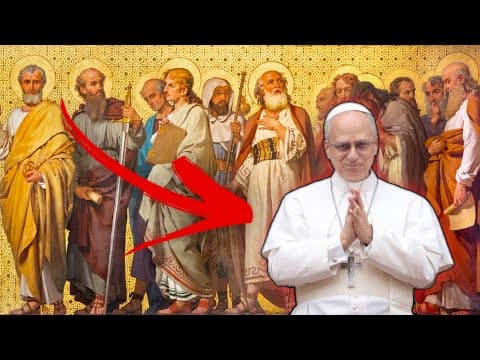
This blog post explores the significant differences between Catholicism, Orthodoxy, and the early Christian church. It argues that both traditions have deviated from the teachings and practices of the first-century church, particularly in areas such as church leadership, baptism, the Eucharist, and the understanding of salvation. The author emphasizes the importance of returning to biblical foundations and warns against the dangers of counterfeit faith and traditions that contradict scripture.
Roman Catholic and Eastern Orthodox apologists often claim that their churches represent the true continuation of the early Christian church, maintaining an unbroken line of tradition since the time of the apostles. However, a closer examination of scripture and historical evidence reveals a starkly different reality. This post outlines 14 reasons why Catholicism and Orthodoxy have diverged significantly from the early church.
Welcome to this important discussion on the differences between Catholicism, Orthodoxy, and the early church. This exploration aims to educate and provoke thought, especially for those from religious backgrounds. While this topic may be controversial, it is essential to confront the truth and understand the implications of these differences.
Both Catholicism and Orthodoxy have established hierarchies that far exceed the biblical model of church leadership. The New Testament describes only three terms for church leaders:
The early church was characterized by a decentralized leadership structure, contrasting sharply with the centralized authority seen in Catholicism and Orthodoxy today.
The claim of apostolic succession in both traditions lacks biblical support. The New Testament does not indicate that Peter appointed a successor, nor does it suggest a continuous line of authority. Instead, Peter referred to himself as a fellow elder, emphasizing a plurality of leadership rather than a singular authoritative figure.
The early church was a fellowship of believers, not an institution. The term Ecclesia refers to a gathering or assembly, highlighting the relational aspect of the church rather than a hierarchical structure. In contrast, Catholicism and Orthodoxy operate as centralized institutions with defined hierarchies.
While tradition is acknowledged in the New Testament, it is often presented negatively. Jesus rebuked the Pharisees for adhering to human traditions that contradicted God's commandments. The traditions upheld by Catholicism and Orthodoxy often conflict with biblical teachings, leading to a distortion of the gospel.
The practice of the Eucharist in Catholicism and Orthodoxy involves the belief in transubstantiation, where bread and wine become the actual body and blood of Christ. This concept is absent from the early church, which viewed the Eucharist as a memorial of Christ's sacrifice rather than a literal consumption of His flesh and blood.
Infant baptism is a practice unique to Catholicism and Orthodoxy, lacking biblical support. The early church baptized individuals who made a conscious decision to follow Christ, emphasizing personal faith and repentance rather than ritualistic practices.
Both traditions teach that salvation involves faith and works, contradicting the biblical doctrine of justification by faith alone. The New Testament consistently emphasizes that we are justified by faith apart from works, a principle that is foundational to the gospel.
Purgatory, a doctrine upheld by Catholicism, has no basis in scripture. The idea that individuals can be purified after death through suffering contradicts the biblical teaching that we are appointed to die once and then face judgment.
The veneration of icons and statues in both traditions is a form of idolatry. The early church, rooted in Jewish beliefs, rejected the use of physical representations in worship, understanding that God is spirit and should be worshiped in spirit and truth.
The incorporation of Greek philosophical ideas into Christian doctrine has led to significant deviations from the original teachings of the apostles. Concepts such as the immortality of the soul and dualism have distorted the understanding of salvation and the nature of humanity.
The early church believed in a physical resurrection, a hope that was central to their faith. In contrast, Catholicism and Orthodoxy have introduced ideas that complicate the understanding of life after death, often leading to confusion and superstition.
The early church held scripture as the highest authority, while Catholicism and Orthodoxy often place tradition on equal or higher ground. This shift undermines the integrity of the gospel and leads to teachings that are not biblically sound.
The early church experienced the active presence of the Holy Spirit, guiding and empowering believers. In contrast, both traditions often rely on rituals and traditions rather than the direct work of the Holy Spirit in the lives of individuals.
The Bible warns of a counterfeit religious system that will arise, leading many astray. Both Catholicism and Orthodoxy fit this description, as they have deviated from the teachings of the early church and the core message of the gospel.
In conclusion, the differences between Catholicism, Orthodoxy, and the early church are profound and significant. Understanding these distinctions is crucial for anyone seeking to grasp the true essence of Christianity as taught by the apostles. It is essential to return to the biblical foundations of faith, recognizing the dangers of counterfeit beliefs and practices that have infiltrated the church over the centuries. The call to follow Christ is a call to embrace the truth of the gospel, free from the distortions of tradition and institutional religion.



















