
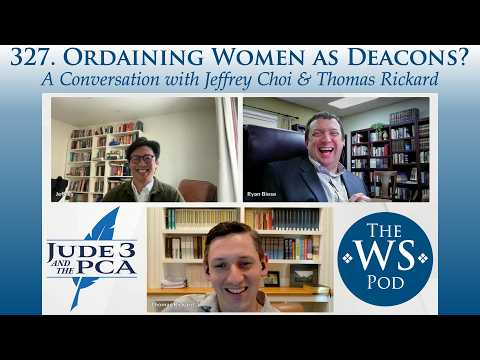
This article explores the ongoing conversation within the Presbyterian Church in America (PCA) regarding the ordination of women as deacons. It covers historical perspectives, biblical interpretations, denominational practices, and the implications of allowing women to serve in this office. The discussion includes insights from PCA ministers and addresses concerns about authority, church polity, and future directions for the PCA.
The question of whether women should be ordained as deacons in the Presbyterian Church in America (PCA) has been a topic of ongoing discussion and debate. This article delves into the history, biblical considerations, denominational practices, and the broader implications of this issue, drawing from a detailed conversation among PCA ministers.
The PCA has traditionally not ordained women as deacons, distinguishing between deacons and deaconesses. However, recent overtures have sought to revisit this practice, proposing that local sessions be allowed to decide whether to ordain women as deacons. This conversation is not new; it has surfaced multiple times, including a notable overture in 2019 that was eventually withdrawn.
One of the ministers involved in the discussion, Reverend Jeffrey Choy, shared his journey into the Reformed faith and his experience with the PCA. He noted that while he grew up in a Korean Presbyterian context, his deeper understanding of Reformed theology and church polity developed during college and seminary. His involvement in the women's study committee and subsequent drafting of overtures on women deacons reflects a desire to address what he sees as a biblical and confessional tension within the PCA.
Historically, the role of women in the diaconate has been complex. John Calvin acknowledged the office of deaconesses, particularly widows, but did not ordain them in the same manner as male deacons. Early church figures like John Chrysostom ordained women deaconesses, and various councils addressed the practice with differing views. The Reformation narrowed church offices primarily to elders and deacons, but the question of women's roles in the diaconate has persisted.
The debate often centers on interpretations of scripture, particularly passages like 1 Timothy 2, which restrict women from exercising authority in the context of teaching and preaching. Advocates for women deacons argue that the office of deacon is one of service and ministry rather than authoritative teaching or ruling, thus not conflicting with these scriptural restrictions.
The distinction between ruling authority (elders) and service authority (deacons) is crucial. Deacons have authority in their role, such as managing benevolences and church property, but this authority is different in nature and scope from that of elders.
The proposed overture suggests that local sessions should have the discretion to ordain women as deacons. This grassroots approach respects the connectional nature of the PCA while allowing diversity in practice among congregations.
Questions arise about how this would function practically, especially when deacons transfer between churches with differing views on women deacons. Ordination is perpetual, but jurisdiction is local, meaning a woman ordained as a deacon in one church may not exercise that office in another that does not recognize women deacons.
Additionally, the role of deacons in presbytery and general assembly committees is limited, and the inclusion of women deacons in these roles would need clarification.
Concerns about authority and submission are significant. Some worry that ordaining women as deacons could lead to women elders, which the PCA currently does not permit. While acknowledging this possibility, proponents emphasize that the PCA's constitutional safeguards require substantial majorities and multiple levels of approval to change such fundamental doctrines.
The discussion also touches on the pastoral care of members who may struggle with the presence of women deacons in their congregation. The advice includes careful teaching about the nature of the office and submission "in the Lord," with recognition that some may need to seek a congregation aligned with their convictions.
Both ministers emphasize the vital role of the diaconate in the church. Deacons serve the physical and practical needs of the congregation, complementing the elders' spiritual oversight. The office is not merely administrative but deeply spiritual and essential for the church's health.
There is a call to recognize and empower godly individuals, including women, who can serve effectively in this office, enhancing the church's ministry and care.
The PCA is described as having a strong and wise foundation, with constitutional safeguards that prevent rapid or unilateral changes in doctrine or practice. While cultural shifts and internal pressures exist, the denomination is hopeful about navigating these challenges with integrity and faithfulness.
The conversation encourages ongoing dialogue, study, and prayerful consideration of the diaconate and women's roles in the church, aiming for unity and faithfulness to scripture.
The question of ordaining women as deacons in the PCA is multifaceted, involving biblical interpretation, church history, polity, and pastoral care. The proposed overture to allow local sessions to decide reflects a desire to address longstanding tensions honestly and respectfully.
Regardless of the outcome, the discussion highlights the importance of the diaconate and the need for the church to thoughtfully consider how all members can serve according to their gifts and callings within the bounds of scripture and confessional standards.
This ongoing conversation invites the PCA and its members to engage deeply with scripture, tradition, and the practical realities of ministry in a changing cultural landscape.



















