
This blog post explores the financial implications of seafood sustainability, highlighting the importance of aligning financial interests with environmental stewardship. It discusses the role of investors in promoting sustainable practices in the seafood industry, presents case studies from China and Indonesia, and suggests innovative financial instruments like blue bonds to support sustainable fisheries.
In recent years, the conversation around seafood sustainability has gained momentum, particularly as the impacts of overfishing and environmental degradation become more apparent. This blog post delves into the financial aspects of seafood sustainability, emphasizing why investors should care about these issues and how financial mechanisms can drive positive change in the industry.
Francois Moser, head of the ocean program at Planet Tracker, emphasizes the need for the finance sector to engage with sustainability issues using a financial lens. Planet Tracker is a nonprofit think tank focused on sustainable finance, aiming to align investment with a resilient, just, net-zero, and nature-positive economy. The organization provides research to help investors understand the financial materiality of ecosystem health and encourages them to engage with companies on sustainability issues.
Profitability Concerns: Investors primarily focus on profitability. Research shows a correlation between overfishing and lower profit margins for seafood companies. For instance, a study revealed that the most overfished species yielded the lowest margins for a major retailer, indicating that unsustainable practices can harm financial returns.
Investment in Traceability: Implementing traceability in the seafood supply chain can significantly increase profitability. Estimates suggest that the global profit pool in the seafood industry could rise by 60% if traceability measures were universally adopted, reducing food waste and recalls.
Capital Allocation Strategies: Companies that fail to address sustainability issues may appear to be growing financially, but a deeper analysis often reveals deteriorating fundamentals. For example, Japanese seafood companies have engaged in mergers and acquisitions rather than addressing overfishing, masking underlying problems that could affect long-term profitability.
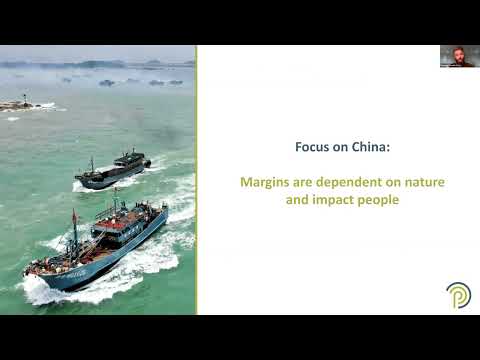
The Chinese distant water fishing fleet operates globally, with tuna being a key profit driver. Despite the profitability of tuna, the fleet's sustainability practices are crucial. Research indicates that sustainable fisheries yield higher profits, suggesting that the fleet has a vested interest in maintaining healthy fish stocks. However, the industry is heavily reliant on subsidies, with at least 45% of profits coming from government support. As international agreements aim to reduce subsidies, the industry must adapt to maintain profitability.
The concept of blue bonds has emerged as a financial tool to support marine conservation efforts. In Chile, local fishers established a grassroots marine reserve, leading to increased fish populations and economic benefits. The blue recovery bond model proposes that investors provide upfront capital to compensate fishers for reduced fishing activities, allowing fish populations to recover. Once the fishery is restored, fishers repay investors through a share of the increased catch.
Indonesia is the largest producer of tuna globally, but climate change poses significant risks to the industry. Research indicates that habitat loss and shrinking fish sizes could lead to a collapse in profitability. However, investing in sustainable practices, such as reducing overfishing and improving traceability, could offset these negative impacts and enhance long-term profitability.
Investors often cite a lack of data on seafood sustainability as a barrier to engagement. Planet Tracker has developed a database that provides company-specific data on overfishing and sustainability practices, enabling investors to make informed decisions. This transparency is essential for driving change within the seafood industry.
The intersection of finance and seafood sustainability presents both challenges and opportunities. By understanding the financial implications of sustainability issues, investors can play a crucial role in promoting responsible practices within the seafood industry. Innovative financial instruments, such as blue bonds, can align the interests of investors, fishers, and marine ecosystems, paving the way for a more sustainable future in seafood production. As the financial community becomes increasingly aware of the material risks associated with environmental degradation, the potential for meaningful change grows.
Investors, companies, and stakeholders in the seafood industry must collaborate to address sustainability challenges. By leveraging financial tools and data-driven insights, we can work towards a more sustainable seafood supply chain that benefits both the economy and the environment.



















