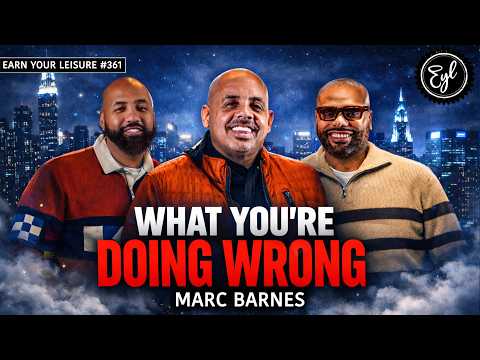
Mark Barnes, America's leading club owner, reveals his journey from humble beginnings to building a $60 million nightlife empire. He emphasizes the power of the black dollar, the importance of exceptional customer service, and the pitfalls of relying on artists. Barnes shares insights on managing large venues, the evolution of bottle service, and his innovative membership model, offering invaluable lessons for entrepreneurs.
Mark Barnes, recognized as America's number one club owner, offers a rare and insightful look into the world of nightlife entrepreneurship. With over 35 years of experience, Barnes has built a $60 million empire in Washington, DC, including the legendary Park on 14th Street, a 15,000 square foot multi-level event center that serves as a restaurant, club, and brunch spot.
Barnes highlights a crucial but often overlooked fact: there is no money like the black dollar. His venues have consistently demonstrated the spending power of the black community, with events like Dream drawing 8,000 people a night and Gilbert Arenas' birthday party generating $400,000 in bottle service sales alone. This spending power fuels black excellence and entrepreneurship, and Barnes is committed to bringing his community along with him.
Starting at 19, Barnes entered hospitality influenced by his parents—his father was in the restaurant business, and his mother was a hardworking professional. Early on, Barnes faced racial barriers, as black people were often not allowed in downtown clubs. He innovated by securing happy hours in white establishments from 5 to 10 pm, proving he could generate more revenue than the clubs did during their prime hours.
He also focused on improving customer experience, hiring bathroom attendants, and training bartenders, inspired by Houston's renowned training program. Barnes stresses the importance of "unreasonable hospitality," where the focus is on how customers feel and how issues are resolved, rather than just the food or drinks.
Barnes' journey includes iconic venues like Club Dream and Club Love. Dream was known for hosting artists weekly, drawing massive crowds, but Barnes realized relying on artists was risky and expensive. He transitioned to Love, focusing more on the venue and customer service rather than star power.
His venues became staples for politicians and celebrities alike, hosting events like the Congressional Black Caucus and Howard Homecoming, attracting thousands regularly.
Barnes purchased a dilapidated Kodak factory building in Ivy City, DC, for $1 million and invested $6 million at a 32% interest rate to renovate it into Dream. Despite the high costs and financial strain, Barnes was committed to quality and perfection, refusing to cut corners. He managed a staff of 350 people and navigated complex payroll and operational challenges.
The bottle service era transformed nightlife, and Barnes was at the forefront. His venues sold hundreds of thousands in bottle service, with Gilbert Arenas' million-dollar birthday party being a highlight. This event featured top artists like Puff Daddy, The Game, T.I., and Busta Rhymes, and was meticulously planned with exclusive invitations and a vibrant atmosphere.
Barnes also dealt with the challenges of managing large cash flows, theft, and security, implementing extensive camera systems and police escorts to protect his business.
Learning from his experience, Barnes shifted focus from relying on artists to investing in exceptional customer service. He believes that if one customer leaves and tells two others about the great experience, the business wins. This approach reduces dependency on costly artists and builds a loyal clientele.
Barnes emphasizes that cleanliness, especially in bathrooms and carpets, is critical. He invests heavily in maintaining a pristine environment, understanding that a dirty venue drives customers away faster than anything else. He shares insights on carpet maintenance and the importance of quality cleaning equipment.
Beyond nightlife, Barnes has capitalized on brunch, which he describes as a major revenue driver. His brunch events attract hundreds, sometimes nearly 800 people, offering excellent food, drinks, and service. He insists on quality ingredients and beverages, such as good champagne and fresh juices, to enhance the experience.
Barnes successfully operates both restaurant and nightlife services, with brunch from 11 am to 5 pm, dinner from 5 pm to 10 pm, and club hours from 10 pm to 3 am. He notes that corporate events are particularly profitable due to fewer security issues and less damage.
Looking ahead, Barnes plans to implement a membership model similar to Soho House, offering tiers of membership with perks like free drinks. This model aims to secure steady revenue upfront, allowing for better staffing and service. Facial recognition technology will enhance security and customer experience.
Barnes shares several key lessons:
Barnes acknowledges the role of AI and technology in shaping the future of hospitality and entertainment. He believes AI will teach and assist future generations, and that innovations like facial recognition will improve security and operations.
Barnes works with his son and daughters, who are involved in hospitality and marketing. He recognizes the challenges of family dynamics in business but values their contributions.
Mark Barnes' story is one of resilience, innovation, and deep understanding of his community and industry. His $60 million blueprint for success in nightlife and hospitality centers on exceptional service, strategic financial management, and leveraging the power of the black dollar. Entrepreneurs can learn from his experiences to build sustainable and thriving businesses.
This comprehensive insight into Barnes' journey offers valuable lessons for anyone looking to succeed in hospitality, nightlife, or entrepreneurship in general.