
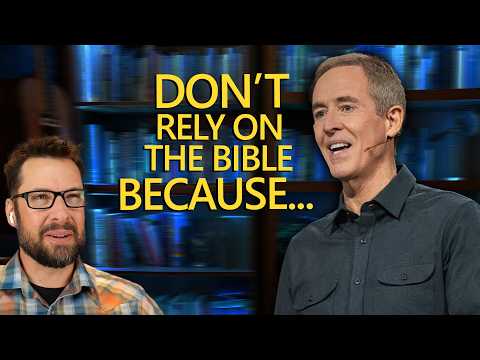
This blog post critically examines Andy Stanley's sermon that suggests a detachment of Christianity from the Bible, arguing that such a stance undermines the foundational beliefs of the faith. It discusses the implications of his teachings, the historical context of the Bible, and the importance of scripture in understanding Christianity.
In recent years, Andy Stanley, a prominent pastor and leader of North Point Ministries, has sparked significant debate within the Christian community. His sermon series titled "Aftermath" has raised questions about the role of the Bible in Christianity. This blog post aims to dissect Stanley's teachings, particularly his assertion that early Christians did not rely on the Bible as a foundation for their faith. We will explore the implications of his message and the historical context surrounding the Bible's role in Christianity.
Stanley begins his sermon by stating that the first-century followers of Jesus did not own or read a Bible. He argues that many of them were illiterate and that the Bible, as we know it, did not exist during their time. This claim sets the stage for his broader argument that modern Christians should not feel compelled to base their faith solely on the scriptures. Instead, he suggests that faith can exist independently of the Bible, focusing instead on the resurrection of Jesus as the core of Christian belief.
Stanley's assertion raises a critical question: if the Bible is not the foundation of faith, what is? He posits that the resurrection of Jesus should be the primary focus for believers. While the resurrection is indeed a pivotal event in Christianity, Stanley's approach seems to downplay the significance of scripture in understanding and interpreting that event.
One of the key points of contention in Stanley's sermon is his claim that the Bible did not come into existence until the fourth century. This statement is historically inaccurate. While it is true that the canon of the New Testament was formalized in the fourth century, the scriptures existed in various forms long before that. The Old Testament, which includes the writings that Jesus and his apostles frequently referenced, was well established and integral to the faith of early Christians.
The early church did not operate in a vacuum devoid of scripture. The apostles, including Peter and Paul, consistently referred to the Old Testament in their teachings. For instance, Peter's sermon at Pentecost (Acts 2) heavily relied on Old Testament prophecies to validate the resurrection of Jesus. This connection between the resurrection and the scriptures is crucial for understanding the early Christian message.
Stanley's approach to faith raises concerns about the potential consequences of detaching Christianity from the Bible. By suggesting that belief in the resurrection can stand alone, he risks creating a version of Christianity that lacks the depth and richness provided by scripture. This minimalist approach may appeal to some, but it undermines the historical and theological foundations that have sustained the faith for centuries.
A robust Christian faith acknowledges the significance of both the resurrection and the scriptures. The Bible provides the narrative and context for understanding who Jesus is and what his resurrection means. It is through scripture that believers can grasp the full scope of God's revelation and the implications of Jesus' life, death, and resurrection.
In conclusion, while Andy Stanley's desire to make Christianity more accessible and appealing is commendable, his approach to detaching faith from the Bible raises significant theological concerns. The scriptures are not merely historical documents; they are the living word of God that informs and shapes the Christian faith. As believers, it is essential to recognize the interconnectedness of the resurrection and the Bible, ensuring that our faith is grounded in both the events of history and the teachings of scripture.
By understanding the historical context and the role of the Bible in early Christianity, we can cultivate a faith that is not only resilient but also deeply rooted in the truth of God's word.



















