
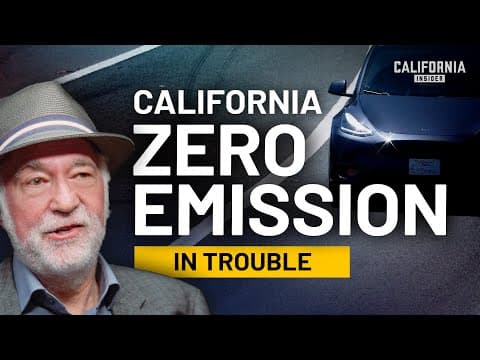
California's ambitious zero-emission vehicle mandate aimed for 2035 faces challenges as electric vehicle incentives fade. Dr. Daniel Sperling discusses the implications of policy decisions, market dynamics, and infrastructure needs, revealing the complexities of transitioning to electric vehicles and the backlash against government mandates.
California's ambitious plan to transition to zero-emission vehicles by 2035 is facing significant challenges. With electric cars losing access to HOV lanes and the federal tax credit of $7,500 being phased out, many are questioning whether the state made the right decision. In a recent interview, Dr. Daniel Sperling, a key policymaker behind California's zero-emission movement, shared insights into the complexities of this initiative and the factors influencing its success.
Dr. Sperling noted that while the zero-emission mandate was intended to signal a commitment to environmental goals, it also sparked backlash among the public. Many felt that the government was imposing its will, leading to resentment and resistance. This highlights the delicate balance policymakers must strike between regulation and public acceptance.
As a significant contributor to California's environmental policies, Dr. Sperling discussed the state's unique fuel standards. He emphasized that these regulations have played a crucial role in shaping the market for electric vehicles (EVs). For instance, Tesla's success can be attributed to the credits it sold to other car manufacturers, which provided essential funding during its early years.
The current landscape for electric vehicles is complex. While about 25% of vehicles sold in California are electric, the market's future remains uncertain. Factors such as the lack of incentives and changing political climates can influence consumer behavior. Dr. Sperling expressed concern that without strong support, the market for EVs could stagnate or even decline.
Infrastructure is another critical aspect of California's transition to electric vehicles. Dr. Sperling pointed out that most EV owners charge their vehicles at home, but the psychological need for visible charging stations remains significant. As more people in urban areas without home charging options enter the market, the demand for public charging infrastructure will increase.
California's energy landscape is undergoing a transformation as the demand for electricity rises, not only from electric vehicles but also from data centers and building electrification. Dr. Sperling highlighted the challenges faced by utilities in adapting to this new reality, as the existing regulatory framework was designed for stable electricity consumption rather than rapid growth.
The transition to electric trucks presents its own set of challenges. While regulations have been established to electrify a significant portion of trucks by 2035, the feasibility of these goals is questionable. Dr. Sperling noted that while smaller delivery trucks are well-suited for electrification, long-haul trucks face significant hurdles due to battery weight and charging logistics.
Dr. Sperling's most significant contribution to California's environmental policy is the Low Carbon Fuel Standard (LCFS). This regulation requires fuel suppliers to reduce the carbon intensity of their products, allowing for flexibility in how they achieve these goals. The LCFS has successfully incentivized the production of renewable fuels and has led to a significant reduction in the carbon footprint of California's transportation fuels.
As California navigates its ambitious goals, Dr. Sperling emphasized the importance of crafting policies that balance environmental objectives with economic realities. He acknowledged that while the transition to electric vehicles is essential for reducing greenhouse gas emissions, it must be done thoughtfully to avoid unintended consequences.
California's journey toward a zero-emission future is fraught with challenges, but it also presents opportunities for innovation and leadership. Dr. Sperling's insights shed light on the complexities of this transition, highlighting the need for a collaborative approach that considers market dynamics, consumer behavior, and infrastructure development. As the state continues to push for ambitious environmental goals, the lessons learned from this experience will be invaluable for other regions looking to follow suit.



















