
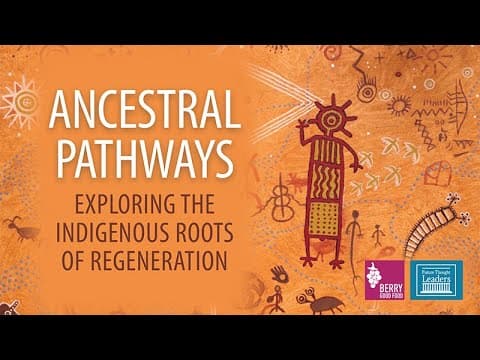
This blog post discusses a panel discussion held during Indigenous Heritage Week, focusing on the indigenous roots of regenerative agriculture. The panelists, including indigenous scholars and activists, share their insights on the importance of reconnecting with ancestral practices, the significance of seeds, and the need for solidarity among indigenous communities to combat historical trauma and promote food sovereignty.
The 13th Future Thought Leader Panel Discussion, organized by Berry Good Food in partnership with UCTV, took place during Indigenous Heritage Week and Native American Heritage Month. This event, titled "Ancestral Pathways: Exploring the Indigenous Roots of Regeneration," was co-sponsored by Indigenous Regeneration and the World Design Capital. The panel aimed to delve into the historical and contemporary practices of indigenous peoples in relation to regenerative agriculture.
The event began with an acknowledgment of the Kumeyaay Nation, the original stewards of the land where the discussion was held. The artwork displayed during the panel was created by Kenneth Banks, a Kumeyaay artist, who contributed his mural titled "Honoring Our Ancestors."
The panel featured a diverse group of experts:
The discussion began with a focus on regenerative agriculture, a concept often perceived as modern but deeply rooted in indigenous practices. The panelists emphasized the need to trace these practices back to their origins, highlighting the holistic relationship indigenous peoples have with the land.
Dr. Lyla June Johnston spoke about the misconceptions surrounding indigenous peoples and their relationship with the land prior to European colonization. She emphasized that indigenous communities were not primitive nomads but rather sophisticated stewards of the land, managing extensive gardens and ecosystems that supported both human and non-human life. Examples included the cultivation of chestnut trees and clam gardens, which showcased the intentional management of natural resources.
Dr. Maria Elena Huambachano shared insights from her research on indigenous food sovereignty, emphasizing the shared traditions among indigenous peoples across the globe. She highlighted the importance of understanding local knowledge systems and the need for solidarity among indigenous communities to reclaim their food systems and cultural practices.
The conversation shifted to the significance of seeds in indigenous cultures. Adam Uribe discussed the importance of seed saving and the connection between seeds and cultural identity. He emphasized that seeds are not just agricultural inputs but are integral to the stories and traditions of indigenous peoples.
The panelists collectively stressed the importance of reconnecting with ancestral practices as a means of healing from historical trauma. They highlighted the need for indigenous communities to reclaim their food systems and cultural practices, which have been disrupted by colonization and modern agricultural practices.
Dr. Lyla June Johnston emphasized the importance of solidarity among indigenous peoples and the need for allies to support their efforts. She called for a collective movement to recognize and uplift indigenous voices in discussions about land management, food sovereignty, and environmental justice.
The panel concluded with a call to action for all attendees to engage with indigenous communities, learn from their knowledge, and support their efforts in reclaiming their cultural practices and land. The discussion highlighted the resilience of indigenous peoples and the importance of fostering relationships based on respect, reciprocity, and love for the Earth.
As the panelists shared their experiences and insights, it became clear that the path to regeneration lies in honoring the wisdom of indigenous peoples and their deep connection to the land. By embracing these ancestral pathways, we can work towards a more sustainable and equitable future for all.



















