
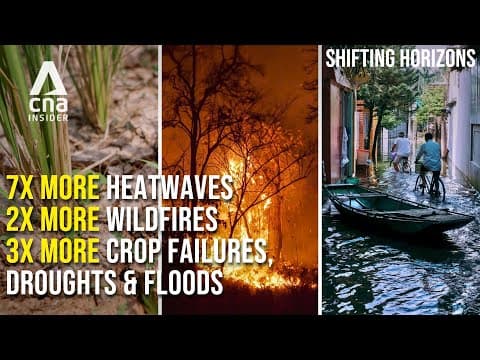
Asia's youth, particularly in India, China, and Indonesia, face severe climate change impacts, including air pollution and extreme weather. Despite these challenges, they are innovating solutions and engaging in green initiatives to combat environmental issues and secure a sustainable future.
Asia's demographic shifts are set to redefine the global landscape, with India, China, and Indonesia at the forefront. These nations not only lead in global GDP growth projections but also house over two billion individuals under the age of 30. This young population is viewed as the engine of growth for the Asian Century. However, the promising statistics mask a grim reality: climate change poses unprecedented risks to their future.
The greatest modern threat to humanity, climate change, is particularly alarming for Asia's youth. Everyone under 40 today will face extreme climate events that their grandparents never experienced. In India, for instance, air pollution has reached alarming levels, with New Delhi's PM2.5 particle concentration being nearly 40 times the WHO's safe limit. Dr. Serene, a pulmonologist in New Delhi, highlights the dire health consequences of this pollution, especially for children.
Dr. Serene notes that many children in Delhi suffer from asthma and other respiratory issues due to poor air quality. A 2021 study revealed that three out of ten school children in Delhi experience asthma, which affects their academic performance and overall quality of life. The sources of this pollution—industrial emissions, vehicular exhaust, and construction activities—also contribute to greenhouse gas emissions, exacerbating climate change.
India, China, and Indonesia are among the top ten greenhouse gas emitters globally, collectively accounting for over 20 billion tons of CO2 emissions in 2022. If current trends continue, scientists predict a temperature rise of approximately 3°C by the century's end, which would have catastrophic effects on the youth of these nations.
All three countries are signatories of the Paris Agreement, which aims to limit global temperature rise to well below 2°C. However, the UN warns that the world is on track to reduce emissions by only 2.6% by 2030, far below the necessary 43% reduction. This failure to meet targets means that young people will face an increased frequency of extreme weather events, including heatwaves and droughts.
In Indonesia, the impact of climate change is evident in agriculture. A 17-year-old student, AIA, shares her family's struggles with declining harvests due to reduced rainfall. Her father's income has plummeted, making college education for AIA a distant dream. This situation reflects a broader trend where farmers are increasingly vulnerable to climate variability.
As Asia urbanizes, with projections indicating that by 2050, two-thirds of the population will live in cities, the pressures of climate change will intensify. In China, for example, delivery workers like Wle face extreme heat during summer months, with heatwave-related deaths doubling in 2022 compared to the previous year.
Jakarta, projected to become the world's most populous city, faces severe flooding risks due to land subsidence and rising sea levels. A local researcher warns that if current trends continue, 95% of Jakarta's coastal areas could be submerged by 2050, displacing millions. The Indonesian government has proposed relocating the capital, but concerns remain about whether the new city will face similar issues.
Despite these challenges, young people across Asia are taking action. Over 105,000 youth from 184 countries have joined UNESCO's Young Climate Action Network, showcasing a global movement towards environmental solutions.
Calvin, a 31-year-old entrepreneur, co-founded an app called Surplus, which connects food retailers with excess stock to consumers at discounted prices. This initiative aims to reduce food waste, a significant issue in Indonesia, where millions of tons of food are discarded annually.
In India, startups like Pixel are leveraging satellite technology to monitor environmental changes. Founders O and Shiage aim to use hyperspectral imaging to detect pollutants and assess soil health, contributing to climate solutions.
Young people are increasingly interested in green jobs, which focus on sustainability and reducing environmental impact. However, they face challenges such as a lack of experience and limited job opportunities in this emerging sector. The potential for job creation in green industries is significant, with projections suggesting that millions of jobs could be created globally if countries transition to greener economies.
Throughout my journey across India, China, and Indonesia, I have witnessed the resilience and innovation of young people facing the daunting challenges of climate change. They are not only adapting to their circumstances but also actively seeking solutions to secure a sustainable future. As they navigate the complexities of a changing world, their determination and creativity may very well propel the region into a new era of growth and sustainability. The youth are ready to turn the tide, and their potential is boundless.



















