
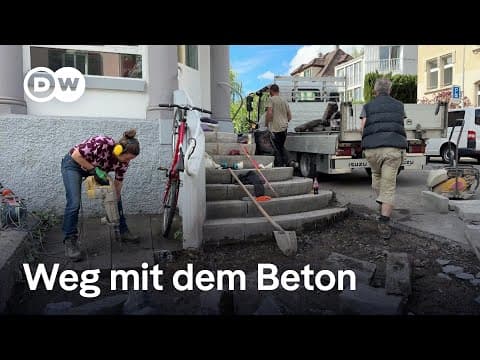
The Asphaltknackerinnen are a group in Switzerland dedicated to combating climate change by removing asphalt and promoting green spaces. Their initiatives aim to restore natural land, improve biodiversity, and manage stormwater effectively, addressing the increasing frequency of extreme weather events in Europe.
In recent years, Europe has witnessed an alarming increase in extreme weather events, including heavy rains and flooding. These phenomena are largely attributed to climate change and human activities that lead to the sealing of land surfaces with asphalt and concrete. In Switzerland, a group known as the Asphaltknackerinnen is taking action to combat these issues by advocating for the removal of sealed surfaces and the restoration of natural landscapes.
The Asphaltknackerinnen, which translates to "asphalt breakers," focus on raising awareness about climate change and biodiversity. Their mission involves uncovering sealed soils, promoting natural greening, and sharing their findings with the public. They believe that increasing natural areas and reducing asphalt and concrete coverage is crucial in addressing the challenges posed by climate change, such as heatwaves, droughts, and heavy rainfall.
One of the prominent figures in this movement is Bettina Walch, a former journalist who has become adept at using jackhammers to break up asphalt. She previously hosted a television program on biodiversity and now collaborates with Isabel Sediw, a biologist. Together, they provide guidance to homeowners and housing cooperatives on how to restore concrete areas back to nature.
The Asphaltknackerinnen emphasize the critical role of soil in our ecosystem. They highlight that one-third of the world's soils are degraded, which hampers food production and water absorption. Their advocacy aims to remind society of the importance of caring for our soil, as it is essential for sustaining life.
In Switzerland alone, there is significant potential for greening sealed surfaces. Isabel Sediw points out that the area covered by parking lots could be transformed into green spaces equivalent to 900 football fields. With approximately 64 square kilometers of sealed parking areas in Switzerland, the opportunity for restoration is immense.
The Asphaltknackerinnen are involved in various projects aimed at converting asphalted areas into vibrant living spaces. One notable initiative is in Winterthur, where a pilot project named "Schwammstadt" (Sponge City) is underway. This project aims to create spaces that can absorb rainwater, alleviating pressure on drainage systems during heavy rainfall.
In Winterthur, the transformation of a former parking lot into a garden space illustrates the potential benefits of such projects. Instead of hot concrete slabs that do not absorb rainwater, the area will feature green gravel and vegetation, providing cooling effects and creating a pleasant environment for families. This initiative not only enhances the aesthetic appeal but also contributes to ecological sustainability.
The increasing frequency of heavy rainfall has led to urban flooding in various Swiss cities, including Zofingen. Following a significant flood event eight years ago, local authorities have begun to dismantle asphalt surfaces gradually. The goal is to create more green strips and reduce paved areas, allowing rainwater to permeate the ground rather than overwhelming drainage systems.
The Asphaltknackerinnen believe that every new project contributes to a larger solution. By restoring green spaces, they aim to mitigate the effects of drought and heavy rainfall, which are becoming more common even in mountainous regions like Switzerland. The creation of gardens and green areas not only benefits the environment but also enhances the quality of life for residents.
The Asphaltknackerinnen are leading a vital movement in Switzerland, advocating for the removal of asphalt and the restoration of natural landscapes. Their efforts highlight the importance of soil and green spaces in combating climate change and managing urban flooding. As they continue to inspire others with their projects, the hope is that more cities will adopt similar initiatives, fostering a healthier and more sustainable environment for future generations.



















