
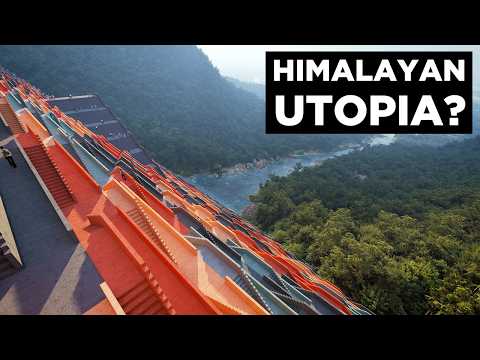
Bhutan is embarking on an ambitious project to create Gelephu Mindfulness City, a unique urban development that prioritizes happiness, sustainability, and cultural preservation. This initiative aims to address the country's youth exodus by providing opportunities while maintaining Bhutan's deep-rooted values. The city will feature innovative infrastructure, including bridges with temples and an airport, all designed to harmonize with nature and promote well-being.
Imagine a place where happiness isn’t just a feeling — it’s written into the constitution. Where school and hospital visits don’t come with a price tag. And where there are no traffic lights. Welcome to Bhutan: the Land of the Thunder Dragon. Tucked high in the Himalayas, it’s a country unlike any other — deeply spiritual, stunningly beautiful, and famously cautious about modern development. However, even paradise has its problems.
Despite its many advantages, Bhutan faces a significant challenge: a growing number of young people are leaving the country in search of better job opportunities abroad. This trend has led to what some describe as an existential crisis for the nation. Young Bhutanese, educated and talented, are seeking higher-paying jobs, leaving behind a country rich in culture and spirit but still largely agrarian and economically challenged.
In response to this crisis, Bhutan’s beloved king has proposed a bold and innovative solution: the construction of Gelephu Mindfulness City (GMC). Unveiled in December 2023, GMC is envisioned as a modern metropolis that fuses ancient wisdom with cutting-edge design, prioritizing mindfulness over materialism. This city aims to provide a space where Bhutanese can thrive, learn, and grow without sacrificing their cultural values.
Unlike typical urban developments that focus on skyscrapers and commercialism, GMC will consist of a series of towns interconnected by stunning bridges and natural landscapes. The design emphasizes harmony with nature, featuring structures that reflect Bhutanese architectural traditions while incorporating modern sustainability practices.
The bridges in GMC are not merely functional; they are designed to be focal points of the city. One bridge will house a temple, offering insights into the lives of resident monks, while another will contain a medical center that integrates both Western and traditional Bhutanese medicine. These structures draw inspiration from Bhutan’s fortified monasteries, known as dzongs, which are strategically located to enhance community life.
One of the most ambitious projects within GMC is an airport being constructed over a naturally flowing river. This innovative design ensures that the river continues to flow, maintaining the ecosystem for local fish. The airport terminal will feature locally sourced materials and a design that promotes mindfulness, with lush greenery integrated into the structure to create a calming environment for travelers.
Another remarkable feature of GMC is a hydroelectric dam inspired by India’s ancient stepwells. This dam will not only generate energy but will also include a temple at its center, symbolizing the integration of spirituality and sustainability. Bhutan is already a leader in renewable energy, with 99% of its energy coming from hydropower, making it one of the world’s few carbon-negative countries.
Bhutan’s commitment to environmental sustainability is evident in GMC’s design. The city will limit building heights to six stories to reduce the use of carbon-intensive materials. Additionally, the city will implement buffer zones around rivers, utilizing paddy fields to absorb excess water during monsoon seasons, effectively turning the city into a sponge rather than relying on extensive sewer systems.
The development of GMC is not just about creating a new city; it is also an opportunity for Bhutan to learn from global experts in urban planning and construction. The king has expressed a desire for Bhutanese to gain the skills necessary to manage similar projects in the future, ensuring that the country can contribute to global discussions on sustainable urban development.
As Bhutan embarks on this ambitious project, there is a palpable sense of anticipation and hope. Gelephu Mindfulness City represents not just a new urban development but a new chapter for Bhutan, one that prioritizes happiness, sustainability, and cultural preservation. This initiative could potentially reverse the trend of youth migration by providing opportunities that align with Bhutanese values.
In the words of Jamyang Loden, a Bhutanese monk, this project aims to bring peace, curiosity, and reflection into the lives of its citizens. As GMC develops over the next decade, it will be closely watched as a model for how modern cities can be built in harmony with nature and culture, offering valuable lessons for the rest of the world.



















