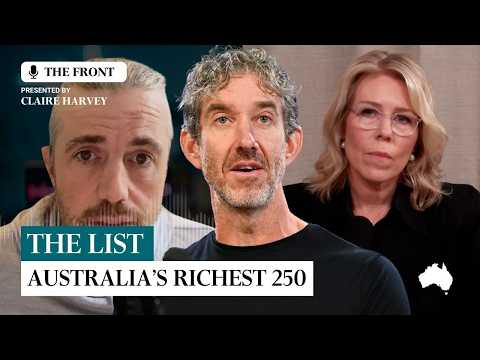
Australia's richest individuals face volatility due to global crises, inflation, and AI advancements. Gina Reinhardt remains at the top, while others like Atlassian's founders struggle with market shifts. The blog explores how billionaires are adapting to these changes and the impact on their wealth and businesses.
The release of Australia's richest 250 list has sparked discussions about the current state of wealth among the nation's billionaires. Editor John Stenzel provides insights into the dynamics of wealth in Australia, particularly how recent global events and economic shifts are affecting the richest individuals.
Gina Reinhardt continues to hold the top position on the list, a status she has maintained for about five to six years. Her wealth is closely tied to the iron ore market, particularly exports to China. Despite spending more time in the United States, her Australian business remains robust.
The current economic landscape is marked by volatility, influenced by various crises, including those in Iran and potential fuel shortages. Stenzel notes that the stock market has seen unprecedented fluctuations, with daily movements of up to 12%. This volatility affects even the wealthiest individuals, as sentiment drives stock prices.
High inflation rates pose challenges for billionaires, particularly those with retail businesses. While some billionaires may not feel the direct impact of rising interest rates due to their wealth management strategies, the overall economic climate can affect consumer behavior and, consequently, their businesses.
Following Reinhardt, Harry Triguboff, a property developer, and Anthony Pratt, whose fortune is tied to the cardboard box industry, round out the top three. Pratt's business has benefited from the surge in home deliveries, although he faces challenges related to manufacturing costs and exchange rates.
Clive Palmer, another billionaire with political aspirations, ranks fourth. The founders of Canva, Clif and Melanie Perkins, are fifth and sixth, respectively. Canva has made strides in the AI space, although they face challenges integrating new technologies into their business model.
The Perkins have made acquisitions in the AI sector, but not all have been successful. The integration of AI into their operations has proven challenging, highlighting the difficulties even successful companies face in adapting to rapid technological changes.
Atlassian, once a top contender in the tech space, has seen its founders, Scott Farquhar and Mike Cannon-Brooks, experience a significant decline in wealth due to market volatility and competition from AI-driven companies. The company announced a 10% workforce reduction, reflecting the need to adapt to changing market conditions.
Stenzel emphasizes that many disruptors are now facing disruption themselves, a phenomenon that would have taken generations in the past. The younger generation of billionaires, who once led the charge in innovation, now find themselves grappling with the implications of AI and market volatility.
As the market shifts, there is a noticeable trend towards traditional industries such as mining and real estate. Investors are increasingly favoring companies that demonstrate profitability, moving away from the previous trend of valuing companies based solely on potential.
Nicola Forest has surpassed her ex-husband Andrew Forest in wealth, primarily due to her holdings in Fortescue Metals Group. Their shared investments reflect a balanced approach to wealth management, with both focusing on sustainable industries.
Michael Derel, an infrastructure investor, has made significant strides in the past few years, while Kerry Stokes remains a powerful figure in mining and media. Stokes' wealth is now more diversified, with a focus on construction and infrastructure.
Matt Latimore, a coal baron, has an inspiring story of rising from humble beginnings to significant wealth through persistence and strategic investments in the coal industry. His journey reflects the diverse paths to wealth among Australia's billionaires.
The landscape for billionaires in Australia is rapidly changing, influenced by global events, economic volatility, and technological advancements. As these individuals navigate the complexities of their wealth, their stories reveal the challenges and opportunities that come with being at the top of the financial hierarchy. The current climate serves as a reminder that even the wealthiest are not immune to disruption, and adaptability is key to maintaining their status in an ever-evolving market.