
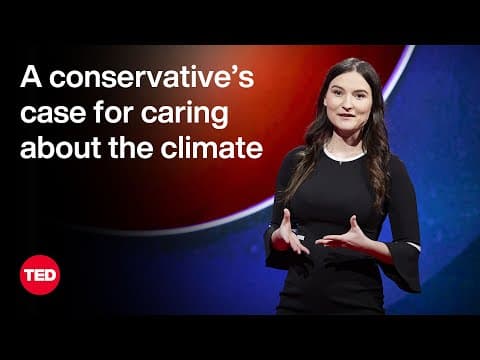
Danielle Butcher Franz discusses her journey as a conservative who cares about climate change, emphasizing the need for bipartisan cooperation to address environmental issues. She highlights the founding of the American Conservation Coalition and the importance of changing narratives around climate action within the Republican Party.
In a world where political affiliations often dictate perspectives on critical issues like climate change, Danielle Butcher Franz shares her unique journey as a conservative who is deeply committed to environmental stewardship. Her experiences reflect a broader cultural challenge and the necessity for bipartisan dialogue in addressing climate change.
Franz grew up in a small town in northern Minnesota, where outdoor activities were a way of life. Summers were spent swimming and kayaking, while winters involved snowmobiling and ice skating. Her passion for the environment was nurtured during hunting trips with her father, where they both recognized conservation as a shared value. They acknowledged the reality of climate change and the urgent need for action.
As Franz matured, her political views began to diverge from her progressive upbringing. She found herself aligning more with the Republican Party on various issues, including abortion and economic policies. Despite this shift, her commitment to environmental issues remained steadfast. However, this alignment often placed her at odds with her family and within environmental circles, where Republicans were frequently criticized.
Franz highlights a significant cultural problem: environmentalists often overlook the concerns of vital constituencies such as farmers, hunters, and rural Americans. She observed that while the left was quick to criticize the right, they failed to engage constructively with those who held different views. Conversely, the Republican Party was increasingly skeptical of climate science, which hindered productive dialogue.
Realizing that climate change cannot be solved by one political party alone, Franz emphasizes the importance of collaboration. With multiple presidential elections and congressional turnovers expected by 2050, it is unrealistic to assume that one party can single-handedly address climate issues. She argues that without cooperation, climate change will continue to worsen.
In 2017, Franz co-founded the American Conservation Coalition (ACC) with a group of young Republicans who sought to engage conservatives in environmental discussions. They aimed to create a platform where conservatives could address climate issues without compromising their values. Notably, 81 percent of young conservatives believe climate change is real and want action taken.
Franz explains that changing the narrative around climate change is crucial. Many on the left view all Republicans as climate deniers, while many on the right see climate action as a guise for government overreach. The ACC works to combat these misconceptions through media appearances, op-eds, and amplifying conservative voices advocating for climate action.
The ACC's message has resonated widely, with appearances in media over 3,000 times and a reach of hundreds of millions on social media. Politicians like Congressman John Curtis of Utah exemplify the potential for Republicans to embrace climate change as a viable issue. Curtis founded the Conservative Climate Caucus and won his primary by advocating for climate solutions, demonstrating that caring about the environment can be an electoral asset.
Franz outlines several policy proposals that Republicans can champion, including:
While conservatives and progressives may not always agree on the methods to tackle climate change, there is common ground in their shared commitment to the environment. Franz calls for open dialogue and collaboration, urging all parties to engage in good faith discussions about climate solutions. The future of our planet depends on our ability to work together, regardless of political affiliation.



















