
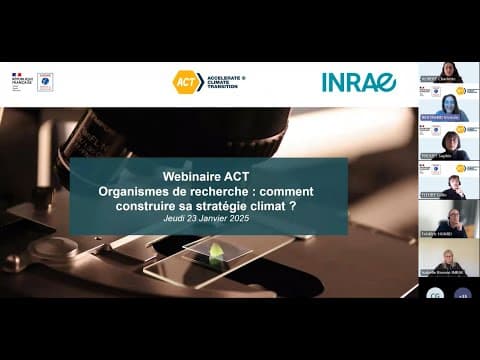
This blog post discusses the ACT methodology for research organizations, detailing its purpose, structure, and the steps involved in developing effective climate strategies. It highlights the importance of adaptation in research practices and the role of various stakeholders in achieving climate goals.
In today's world, climate change poses significant challenges that require immediate and effective responses from all sectors, including research organizations. This blog post explores the ACT (Accelerate Climate Transition) methodology, which provides a structured approach for research institutions to develop and implement their climate strategies. The ACT initiative was launched in 2016 following the COP21 conference, aiming to create a framework for climate accountability among organizations.
The ACT initiative focuses on evaluating the credibility and coherence of organizations' transition plans towards a low-carbon future. It provides tools and methods tailored to various sectors, including industrial and research sectors, to align their activities with the goals of the Paris Agreement. The ACT methodology is divided into three main steps:
The ACT methodology has been adapted specifically for research organizations, recognizing their unique challenges and contributions to climate change mitigation. The adaptation involves a detailed framework consisting of nine modules, each addressing different aspects of climate strategy development:
The ACT methodology is structured into five key steps:
The National Research Institute for Agriculture, Food and Environment (INRAE) has successfully implemented the ACT methodology. Established in 2020, INRAE focuses on agriculture, food, and environmental research. The institute's climate strategy aims to reduce emissions by 70% by 2050 compared to 2019 levels.
INRAE's approach involved:
Organizations looking to adopt the ACT methodology can access financial support through various funding programs. The ADEM (French Environment and Energy Management Agency) offers grants to assist organizations in their climate transition efforts.
Looking ahead, the ACT methodology is being expanded to include broader environmental considerations, such as biodiversity and social impacts. This evolution aims to create a more holistic approach to sustainability in research practices.
The ACT methodology provides a robust framework for research organizations to develop effective climate strategies. By adapting the methodology to their specific needs, these organizations can play a crucial role in addressing climate change and contributing to a sustainable future. As more institutions engage with this framework, the collective impact on climate action will be significant, paving the way for a resilient and low-carbon society.



















