
This blog post explores the intricate process of constructing a wind farm in Süstedt, Germany, detailing the challenges faced by construction teams, the technology used, and the importance of safety and coordination in building wind turbines to support Germany's energy transition by 2030.
Germany is on a mission to transition to renewable energy, and a significant part of this effort involves the construction of thousands of wind turbines by 2030. This blog post delves into the construction of a wind farm in Süstedt, located south of Bremen, highlighting the challenges faced by the teams involved, the technology utilized, and the critical importance of safety and coordination in this massive undertaking.
The construction of a wind farm is a mammoth project that requires meticulous planning and execution. With a goal of erecting 15 wind turbines in Süstedt, the construction teams face numerous challenges, including a recent construction halt due to unauthorized building permits.
Safety is paramount on the construction site. The site manager, Mathias Itjes, emphasizes the importance of safety gear, such as helmets, and the consequences of neglecting safety protocols. Workers are warned that repeated violations could lead to severe penalties, including fines and dismissal from the site.
The construction of the wind turbine begins with the assembly of a concrete tower made from 90 segments. The first step involves aligning the leveling feet on the foundation with precision, as the segments will be stacked without mortar in between. This requires careful coordination among the workers, especially the crane operator and the signalman, to ensure that each segment is positioned correctly.
Weather conditions can significantly impact construction progress. Mathias Itjes recounts how heavy rains turned the site into a muddy quagmire, halting work for weeks. Despite these setbacks, the team strives to stay ahead of schedule, always planning for the next steps in the construction process.
As the tower rises to 60 meters, the complexity of the work increases. Workers must ascend the tower using a crane, as there are no ladders or lifts available. Safety training is mandatory, with workers required to pass physical tests and rescue training every year. The construction of the tower continues with the careful assembly of concrete rings, which must be precisely aligned to ensure structural integrity.
After the concrete tower is completed, the next phase involves the transportation of the rotor blades. The first rotor blade, measuring 78 meters, is transported from Bremen using a specialized vehicle. The transport process is fraught with challenges, including navigating narrow roads and ensuring that the blade remains undamaged.
As the rotor blade approaches the wind farm, unexpected obstacles arise, such as trees that need to be removed to clear the path. Mathias Itjes coordinates the removal of these obstacles to ensure the transport can proceed smoothly. The team’s experience in handling such situations proves invaluable as they adapt to the challenges presented by the new transport technology.
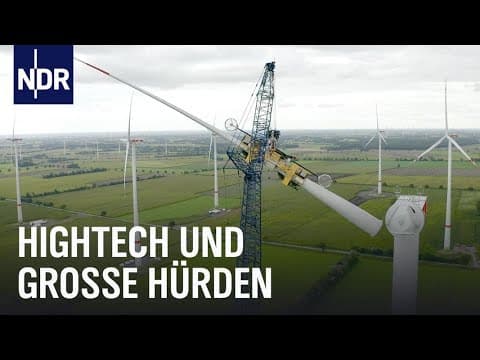
Once the rotor blades arrive at the site, the installation process begins. A large crane is used to lift the blades into position, requiring precise coordination between the crane operators and the ground crew. The installation of the rotor blades is considered the most critical and exciting part of the construction process, as it involves securing the blades to the rotor head at a height of 160 meters.
The installation requires the alignment of 128 bolts, which must be positioned accurately to ensure the blades function correctly. The team works diligently, relying on communication and teamwork to overcome the challenges posed by high winds and the height of the installation.
As of early 2025, the Süstedt wind farm is expected to be fully operational, contributing to Germany's renewable energy goals. The construction of wind turbines is not just about erecting structures; it involves a complex interplay of technology, safety, and teamwork. Despite the challenges faced, the dedication of the construction teams ensures that the transition to renewable energy continues to progress, paving the way for a sustainable future.



















