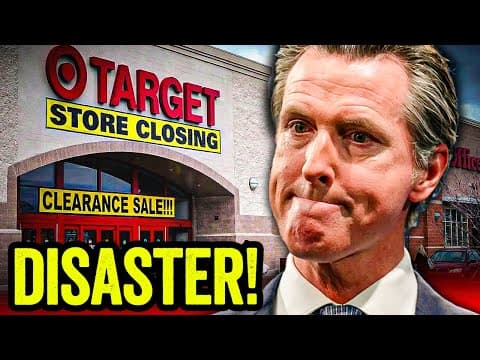
California is facing severe economic challenges under Governor Gavin Newsom, including widespread retail and restaurant closures, job losses, and rising costs attributed to the $20 minimum wage law for fast food workers. The state's wealth disparity, high poverty, and business exodus highlight a growing crisis, with major chains like Target and Walgreens shutting stores and fuel suppliers planning refinery closures.
California is currently experiencing a significant economic crisis, with widespread retail and restaurant closures, job losses, and a growing business exodus. Much of this turmoil is attributed to Governor Gavin Newsom's policies, particularly the implementation of a $20 minimum wage for fast food workers. This article explores the economic fallout in California, the criticisms leveled against Governor Newsom, and the broader implications for the state.
Governor Gavin Newsom recently attended the World Economic Forum in Davos, where he faced harsh criticism. Treasury Secretary Scott Pessin publicly condemned Newsom's economic policies, highlighting the state's outward migration, budget deficit, homelessness crisis, and wildfire devastation. Pessin described Newsom as economically illiterate and accused him of hypocrisy for living lavishly while imposing strict lockdowns and restrictions on Californians.
Newsom's presence at Davos, mingling with global elites, contrasted sharply with the dire conditions faced by many Californians, including those who lost homes in wildfires and the state's large homeless population. Critics argue that Newsom's policies have prioritized virtue signaling over economic reality, leading to widespread economic decline.
California's economic challenges are severe and multifaceted:
These indicators suggest California is struggling with systemic economic issues that are worsening under current leadership.
One of the most controversial policies under Governor Newsom is the $20 minimum wage for fast food workers, which took effect in April 2024. Market data and studies reveal the policy's negative impact:
These outcomes illustrate the unintended consequences of raising the minimum wage too rapidly without considering economic realities.
The economic strain extends beyond fast food, affecting retail and other sectors:
These closures reflect the challenges businesses face operating in California's regulatory and economic environment.
The energy sector is also impacted, with major fuel suppliers planning to leave California:
Economists warn that refinery closures will severely affect California's gas supply, potentially driving prices even higher.
Governor Newsom faces widespread criticism for his handling of California's economic crisis:
These critiques underscore the political challenges Newsom faces both within California and on the national stage.
California's economic situation under Governor Gavin Newsom is dire, marked by job losses, business closures, and a growing population exodus. The $20 minimum wage law for fast food workers, while intended to help working families, has contributed to significant economic disruption. Retail and energy sectors are also struggling, compounding the state's challenges.
As California continues to grapple with these issues, the state's future economic health remains uncertain. The political fallout for Governor Newsom is significant, with many questioning his leadership and vision for the state.
The situation serves as a cautionary tale about the complexities of economic policy and the importance of balancing social goals with economic realities.