
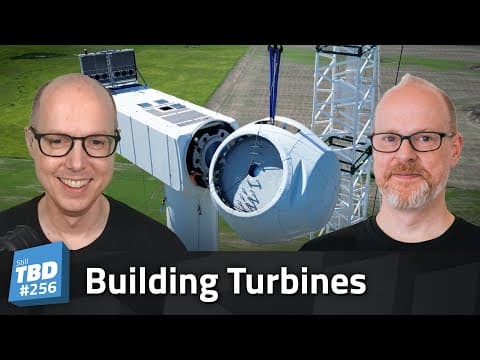
This blog post explores Canada's advancements in wind energy, focusing on the construction of wind farms, the innovative technologies involved, and the implications for sustainable energy. It also discusses the challenges and logistics of building wind turbines in remote areas, as well as the fascinating intersection of engineering and nature through biomimicry.
On today's episode of "Still to Be Determined," we give big props to Canada for its ambitious wind energy projects. In this blog post, we will delve into the construction of wind farms, the innovative technologies being utilized, and the implications for sustainable energy. We will also touch on the challenges faced in building these turbines in remote areas and explore the fascinating intersection of engineering and nature through biomimicry.
Welcome to "Still to Be Determined," the follow-up podcast to "Undecided with Matt Ferrell," where we explore emerging technologies and their impact on our lives. I am Sean, Matt Ferrell's older brother, and today we will discuss the exciting developments in wind energy in Canada.
Canada is making significant strides in renewable energy, particularly in wind energy. The construction of wind farms is a crucial step towards a sustainable future. In our previous episode, we discussed innovative technologies such as ice source heat pumps, which sparked a lot of interest and skepticism among our listeners. Today, we shift our focus to wind energy and the logistics involved in building these massive structures.
Matt recently visited a wind farm site in Saskatchewan, Canada, where he witnessed the installation of enormous wind turbine blades. The trip was logistically challenging, involving a long drive through remote areas. Matt described the beauty of the Canadian landscape, but also the isolation of the location, which raised concerns about safety during his travels.
During his visit, Matt had the opportunity to interact with the project team from RES, the company overseeing the wind farm's construction. He was impressed by their hospitality and willingness to share insights about the project. Matt even participated in a "pod meeting," similar to a stand-up meeting, where team members discussed their daily tasks and challenges.
The construction of wind turbines involves complex engineering and logistics. Each turbine is designed to harness wind energy efficiently, and the size of the turbines has increased over the years, leading to better energy production and reduced bird impacts. One interesting aspect discussed was the use of biomimicry in wind turbine design, where engineers draw inspiration from nature to improve efficiency.
Biomimicry is the practice of learning from and mimicking the strategies found in nature to solve human challenges. For instance, the design of wind turbine blades has been influenced by the serrations on owl wings, which help reduce noise and improve aerodynamics. This innovative approach not only enhances performance but also minimizes the environmental impact of wind farms.
Matt highlighted other examples of biomimicry in technology, such as organic solar cells that mimic photosynthesis in plants and designs inspired by jellyfish for propulsion systems. These advancements showcase the potential of nature-inspired engineering in creating sustainable technologies.
Building wind farms in remote locations presents unique challenges. The logistics of transporting large turbine components can be daunting, especially in areas with limited infrastructure. Matt shared anecdotes from his visit, including the difficulties faced by trucks transporting turbine blades on narrow dirt roads.
Despite these challenges, the wind energy sector is evolving. Companies are developing innovative solutions to improve logistics, such as using airships to deliver turbine parts directly to remote sites. This approach could revolutionize the construction of wind farms in challenging terrains.
As wind energy becomes more prevalent, concerns about its environmental impact, particularly on wildlife, have emerged. However, studies have shown that larger turbines, which operate at slower speeds, result in fewer bird fatalities compared to smaller, faster-spinning models. Additionally, simple measures, such as painting one blade black, can help birds recognize and avoid turbines.
Canada's commitment to building wind farms represents a significant step towards a sustainable energy future. The innovative technologies and engineering practices being employed not only enhance energy production but also demonstrate a growing awareness of environmental impacts. As we continue to explore the intersection of technology and nature, it is clear that the future of energy lies in sustainable practices that benefit both humanity and the planet.
Thank you for joining us on this journey through Canada's wind energy revolution. We encourage you to share your thoughts and insights in the comments below. Your feedback is invaluable as we continue to explore the fascinating world of emerging technologies.



















