
The chemical incident at the Bio-Lab facility during Hurricane Laura highlights the urgent need for improved safety measures and regulatory oversight for chemical facilities in the face of extreme weather events. Key issues identified include inadequate extreme weather preparation, poor emergency response capabilities, and gaps in regulatory coverage for reactive chemicals.
On August 27, 2020, the Bio-Lab chemical facility in Lake Charles, Louisiana, faced a catastrophic incident as Hurricane Laura made landfall. The hurricane, classified as a Category 4 storm, brought extreme winds and heavy rainfall that severely damaged the facility, leading to a significant chemical release and fire.
As Hurricane Laura approached, the National Hurricane Center had forecasted its intensification. In preparation, Bio-Lab began shutting down operations and managed to transport approximately 825,000 pounds of product from the site. However, over 1 million pounds of a TCCA-based formulation remained on-site due to some trucks failing to arrive. The remaining chemicals were stacked on pallets to protect them from potential flooding.
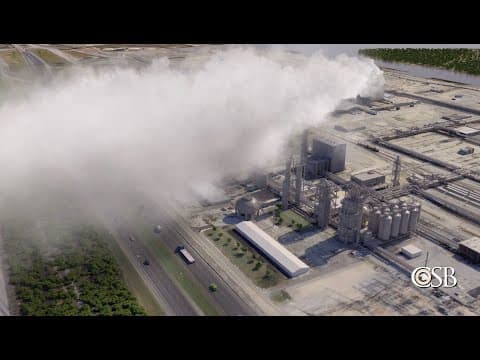
On the morning of August 26, as the hurricane made landfall, the storm's winds ripped off parts of the roof of the production building, allowing rainwater to contact the stored TCCA formulation. This contact initiated a chemical reaction that generated heat, leading to the decomposition of the material and the release of toxic chlorine gas. A fire erupted, creating a massive plume of hazardous smoke that spread over the local community, prompting emergency responders to close Interstate 10 and issue a shelter-in-place order for nearby residents.
By the afternoon of August 27, the situation escalated as chemical clouds were observed emerging from another building at the facility. Emergency responders worked tirelessly to control the chemical release, and after 28 hours, the situation was deemed under control, allowing the reopening of the highway and lifting the shelter order. Fortunately, no injuries were reported.
Following the incident, the Chemical Safety Board (CSB) launched an investigation and identified five critical safety issues that contributed to the disaster:
The CSB found that Bio-Lab did not adequately implement updated guidance from the Center for Chemical Process Safety (CCPS) regarding extreme weather preparedness. The guidance included evaluating facility risks from potential natural disasters. Had Bio-Lab followed these recommendations, they might have identified vulnerabilities in their buildings that were not designed to withstand hurricane-force winds.
Bio-Lab had conducted limited Process Hazard Analyses (PHAs) in 2010 and 2016, which identified the potential hazards of product decomposition due to natural disasters. However, there was no documentation that the recommended evaluations of the warehouse roof structures were ever completed. This oversight could have led to preventive measures that would have protected the chemicals from exposure to rainwater.
The CSB noted deficiencies in Bio-Lab's emergency response capabilities. The facility relied on a fire protection system that was partially non-functional at the time of the incident. A backup generator, which was supposed to power electric fire pumps, was not operational, and personnel struggled to activate a rented generator. This left only one diesel pump available, which was insufficient to control the fire.
Bio-Lab was found to be non-compliant with the National Fire Protection Association (NFPA) codes that require additional precautions for facilities handling hazardous materials. The lack of an automatic sprinkler system and other protective measures likely exacerbated the situation, allowing the fire to grow unchecked.
The CSB highlighted a significant regulatory gap, noting that TCCA-based formulations are not covered under OSHA's Process Safety Management (PSM) standard or the EPA's Risk Management Program (RMP) rule. This lack of regulatory oversight contributed to the incident, as Bio-Lab was not required to implement essential safety management practices that could have mitigated the risks associated with reactive chemicals.
In light of the findings, the CSB made several recommendations:
The incident at Bio-Lab serves as a stark reminder of the vulnerabilities that chemical facilities face in the wake of extreme weather events. It underscores the need for improved safety measures, better emergency preparedness, and enhanced regulatory oversight to prevent similar incidents in the future. As climate change continues to increase the frequency and severity of extreme weather, it is imperative that both companies and regulatory bodies take proactive steps to safeguard communities from the risks associated with hazardous materials.



















