
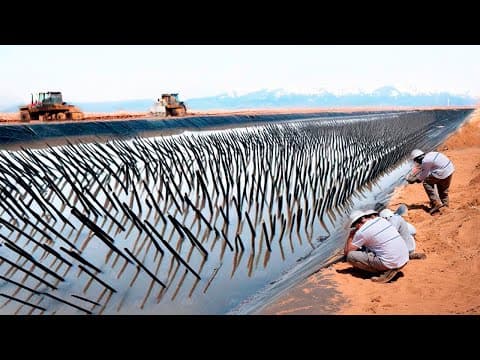
China has made significant strides in combating desertification through innovative methods, particularly the use of straw cells to stabilize sand dunes and promote plant growth. This approach has transformed millions of acres of desert into green areas, showcasing a blend of traditional practices and modern technology.
China has been actively fighting desertification, a challenge that has garnered global attention. According to official data, from 2016 to 2020, the country transformed approximately 21.7 million acres of desertified land into green areas, averaging around 4.3 million acres per year. The efforts did not stop there; in 2022, China planted an additional 9.3 million acres of forest, and in 2023, over 9.8 million acres of degraded land were covered with trees. While these numbers are impressive, the battle against desertification is complex and ongoing.
Experts warn that the greening program may not be entirely effective, with predictions suggesting that if deserts continue to expand, China may need to plant trees for another century. A significant challenge is that many plants struggle to survive in shifting sands, where the roots can become exposed or buried under layers of sand. For instance, in the Taklamakan Desert, about 80% consists of shifting dunes that can move up to 65 feet per year, making it nearly impossible for most plants to thrive.
In China, tree planting takes place annually on March 12, known as Tree Planting Day. On this day, citizens aged between 11 and 60 are encouraged to plant three to five trees each year or engage in related activities. This cultural commitment to reforestation is so significant that many couples choose to marry the day before to commemorate their union with a newly planted tree. Estimates suggest that around 50 billion trees have been planted in recent years, showcasing the population's active participation in combating desertification.
Despite the enthusiasm for tree planting, experts have identified that many plants fail to survive in sandy conditions due to a lack of nutrients and protection from wind. To address this, Chinese researchers have developed an innovative method using straw, a byproduct of agricultural practices. When crops like wheat, oats, and rice are harvested, the leftover straw can be utilized to combat desertification.
The process involves placing straw on sand dunes in a grid-like pattern, creating a checkerboard system. This method not only provides nutrients for plants but also helps stabilize the sand, reducing its movement. The straw decomposes over three years, enriching the soil and allowing resilient plant species to thrive. Research has shown that these straw cells can significantly decrease sand flow by up to 99.5%, providing a safer environment for young plants.
To enhance efficiency, China has mechanized the process of laying straw. Instead of manually creating small piles, long lines of straw can be laid down quickly using specialized vehicles. These machines can automatically dig trenches and lay straw, making the process four to six times more effective than traditional methods. This innovation not only saves time but also ensures that the straw remains in place longer, providing sustained protection for plants.
The use of straw to combat desertification is not a new concept in China. A notable example dates back to 1958 during the construction of the Btu Lanso Railway, which traverses the Tengger Desert. Initially met with skepticism, the railway's builders discovered that straw could effectively stabilize the sand, leading to the successful operation of the railway despite harsh desert conditions. This method has since been recognized and adopted across the country and even internationally.
In recent years, China has continued to innovate in its fight against desertification. The construction of highways through desert areas incorporates straw cells and other protective measures to ensure the longevity of infrastructure. For instance, a high-speed highway opened in 2022 includes multiple layers of protection against sand and wind, demonstrating the effectiveness of straw in modern engineering.
China's multifaceted approach to combating desertification, particularly through the innovative use of straw cells, highlights the importance of blending traditional knowledge with modern technology. As the country continues to face the challenges posed by desertification, these strategies not only contribute to environmental sustainability but also enhance the resilience of ecosystems in arid regions. The ongoing efforts serve as a model for other nations grappling with similar issues, showcasing the potential for innovative solutions in the fight against desertification.



















