
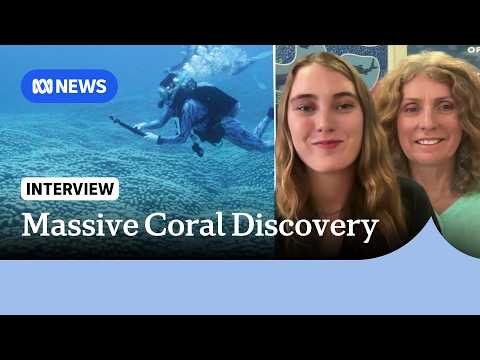
Citizen scientists Jan Pope and Sophie Kalcowski Pope discovered a massive coral colony on the Great Barrier Reef, potentially one of the largest ever documented. The colony, of species Pavona clavus, may be over a thousand years old. This discovery was part of the Great Reef Census, a global citizen science effort combining volunteer divers and AI to monitor reef health.
Imagine encountering a coral colony so vast it resembles a rolling meadow beneath the ocean surface. This extraordinary sight was recently witnessed by citizen scientists Jan Pope and her daughter Sophie Kalcowski Pope during the Great Reef Census, a pioneering global citizen science initiative aimed at surveying the Great Barrier Reef.
Jan and Sophie described their experience as absolutely incredible. Sophie recounted how, upon entering the water, she immediately saw the coral stretching as far as the eye could see. The colony formed a massive, beautiful dome in the middle of the reef, creating a magnificent and biodiverse ecosystem. The scale of the coral was so immense that it only became fully apparent after subsequent dives and detailed documentation.
The coral species discovered is Pavona clavus, known for forming huge super colonies. While other colonies of this species have been found, none have matched the scale of this discovery. Professor Pete Mumby from the University of Queensland suggested that this colony could be over a thousand years old, highlighting its incredible longevity.
There are several hypotheses about whether this vast area is a single colony originating from one polyp or an aggregation of multiple colonies merged into a super colony. Further genetic testing is needed to determine this, but such research is costly and intensive. The citizen scientists expressed interest in partnering with research organizations to explore this further.
The discovery was part of the Great Reef Census, which engages citizens of the Great Barrier Reef and beyond to survey the reef on a large scale. Jan initially contributed privately from her own boat to assist with the census. The project is expanding globally, with pilots planned in the Coral Triangle and the Red Sea.
The initiative combines the efforts of volunteer divers with cutting-edge artificial intelligence (AI) and thousands of virtual volunteers who analyze images online. This collaboration allows for documenting coral cover and reef health on an unprecedented scale, which is crucial for reef conservation amid significant environmental challenges.
The project uses AI developed by expert programmers to assist in analyzing reef images. Virtual volunteers analyze each image four times, and the combined data achieves up to 98% accuracy, comparable to expert analysis. This innovative approach leverages technology and community involvement to monitor reef ecosystems effectively.
All work in the Great Reef Census is volunteer-based. The project runs workshops in schools and corporate organizations, encouraging people to contribute their time to reef conservation rather than passive activities like scrolling on phones. This engagement fosters a community dedicated to protecting the reef.
For Jan and Sophie, participating in this project together has been extraordinary. Jan has long been passionate about the marine environment and is grateful to share this passion with her daughter. Their efforts were supported by the Queensland University of Technology, which provided drone operators to map the coral colony comprehensively.
Using drone boats equipped with photogrammetry technology, the team created detailed models of the coral structure. This allowed for accurate measurements of the colony's size. Additionally, manual measurements were taken underwater using measuring tapes. The team realized the colony extended over 100 meters, marking a significant discovery.
Jan and Sophie are among the few people worldwide to understand the importance of this coral colony. Their discovery not only highlights the vast biodiversity of the Great Barrier Reef but also underscores the value of citizen science and technological collaboration in environmental conservation.
The discovery of this massive coral colony by citizen scientists Jan Pope and Sophie Kalcowski Pope exemplifies the power of community involvement and technology in marine conservation. The Great Reef Census continues to inspire global participation, combining human effort and AI to protect one of the world's most vital ecosystems. This remarkable find offers hope and insight into the resilience and grandeur of coral reefs, encouraging ongoing efforts to preserve them for future generations.



















