
In 2025, climate change is worsening, with scientists confused about rising temperatures and cloud cover changes. Recent studies suggest a decline in low-hanging clouds may be accelerating warming, while predictions for the coming years indicate continued high temperatures. Amidst this, initiatives like Planet Wild aim to restore ecosystems and combat climate change.
Welcome to 2025. Unfortunately, climate change hasn’t gone away; instead, the situation is worse than ever before. A year ago, I expressed my concerns about climate change, primarily because I suspect that climate scientists are systematically underestimating how quickly temperatures will rise. If this is true, we have far less time to complete the necessary energy transition, which is already progressing as smoothly as a toddler trying to assemble IKEA furniture.
My worries stem from the methods climate scientists use to make their predictions. In recent years, they have discarded models that predicted the steepest warming trends, finding arguments to dismiss the most alarming predictions. While they claim this is sound science, I fear they may be trying to eliminate bad news, just like everyone else.
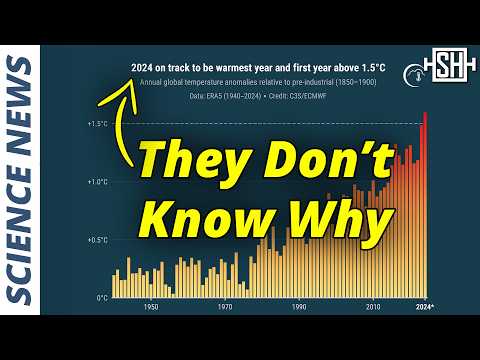
What does the data indicate? Over the past two years, the global average surface temperature has been on the upper limit of expectations. While this discrepancy with the models is not yet significant, it could merely be a natural fluctuation rather than a definitive trend. However, climate scientists are increasingly confused about the situation.
This confusion was highlighted during a meeting of the American Geophysical Union in Washington in December. NASA climate scientist Gavin Schmidt asked attendees if they believed they understood the anomalies of 2023 and 2024 based on the information presented. According to Axios, only a few hands were raised, while the majority indicated that a sufficient explanation had not been provided and that more research is needed. Schmidt acknowledged, "There is something to explain and there is still work to do."
There has been considerable discussion about how a decrease in pollution from ship emissions has contributed to warming, as such pollution helps reflect light back into space and keeps the Earth cool. However, several independent studies have concluded that the impact of declining ship emissions is not substantial enough to account for the current warming trends.
Other factors, such as volcanic eruptions and the El Niño-Southern Oscillation (ENSO), have also been examined. While they contribute to temperature changes, none of these factors alone can explain the observations we are witnessing.
Shortly after the conference, a new study provided some insights. An analysis of data from NASA and the European Centre for Medium-Range Weather Forecasts (ECMWF) revealed that the primary reason for the spike in global temperatures in 2023 was that the Earth reflected less sunlight than expected. This decline in reflection is attributed to a significant reduction in low-hanging clouds. The authors speculate that this may be the first indication of changes in cloud cover due to rising temperatures.
While one year of data is insufficient to establish a trend, if the changes in cloud cover are indeed accurate, this could have dire implications. The reaction of clouds to temperature increases is a major reason for the discrepancies in climate model predictions. High-hanging wispy clouds trap heat and accelerate warming, while low-hanging fluffy clouds reflect more light and mitigate warming. If fewer low-hanging clouds persist, this could lead to accelerated global warming.
Looking ahead, the coming year is likely to break temperature records again. The Earth experiences a quasi-periodic oscillation known as the El Niño-Southern Oscillation, which alternates between warmer (El Niño) and cooler (La Niña) phases. In 2023, we were in a warm phase. Midway through last year, NOAA predicted a transition to a colder phase in late fall. However, they have since updated their predictions, indicating that we will likely remain in a neutral phase at least through the summer of 2025, with any colder phase expected to be brief.
This pattern is not unusual, as similar occurrences have been documented in past decades. However, it does suggest that significant cooling is unlikely this year.
The best metaphor for our response to climate change is that we are like people on a sinking sailing boat, arguing over who gets to climb the mast. We are so preoccupied with international competition and our standing compared to others that we fail to notice the boat is sinking. This is precisely what is happening with climate change. We are pushing climate zones into new regions too quickly for most species to adapt, effectively inviting a mass extinction.
Despite the grim outlook, I have made a New Year's resolution to focus less on what is going wrong and more on what is going right. One initiative I want to highlight is Planet Wild, a crowdfunded nature protection group I joined last year. Planet Wild embarks on monthly missions to restore ecosystems and make a positive impact on the environment. Their efforts include planting trees, reintroducing animals to their natural habitats, and using drones to study blue whales.
In one of their recent missions, they collaborated with individuals in the United States to restore grasslands and biodiversity in the Wild West. They are removing fences and monitoring wildlife such as bison. You can become part of this initiative and witness the impact of your contribution within a month. For those who sign up early, there is even an offer to cover the first month of membership.
As we navigate the complexities of climate change, it is crucial to remain informed and engaged. While the challenges are significant, initiatives like Planet Wild demonstrate that positive action is possible. Let us not forget to subscribe to updates and stay committed to making a difference in our world.



















