
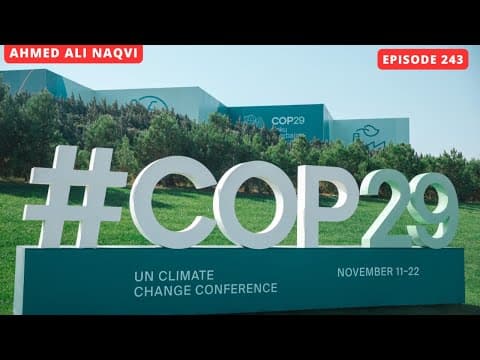
COP 29, taking place in Baku, Azerbaijan, focuses on climate change discussions among global leaders, with significant themes including the implementation of the Paris Agreement, climate financing, and the impact of current geopolitical tensions. The absence of major world leaders raises questions about the conference's effectiveness in addressing urgent climate issues.
The COP 29 meeting is currently underway in Baku, Azerbaijan, from November 11 to November 22. This episode aims to provide a basic introduction to the conference, discussing its purpose, key participants, main agenda, and the potential for successful implementation of its goals.
COP stands for Conference of the Parties, which includes both state and non-state parties that are signatories to the 1992 Rio Agreement, also known as the United Nations Framework Convention on Climate Change (UNFCCC). The first COP was held in 1995, and COP 29 marks the 29th annual meeting. The primary objective of these meetings is to facilitate periodic discussions among leaders and the private sector to develop a comprehensive strategy for addressing climate change.
Interestingly, many major economies and key stakeholders are not participating in this year's COP 29. Notable absentees include:
The absence of these leaders raises concerns about the conference's ability to generate significant outcomes, especially given the geopolitical tensions and ongoing conflicts, such as the wars in Ukraine and Gaza, which overshadow discussions.
The agenda for COP 29 revolves around several critical themes:
A significant focus will be on the implementation of the Paris Climate Accord, which requires states to update their climate strategies every five years. The deadline for the next update is February 2025, and many countries are expected to announce their new strategies during this conference.
Another crucial point of discussion will be the flow of financial resources from developed to developing countries. This includes addressing the challenges faced by developing nations in securing climate financing, particularly from wealthier nations like China and other affluent states.
The topic of carbon credits, a controversial issue since its inception, is also expected to be revisited. The revival of discussions around carbon credits may play a role in shaping future climate policies.
There will be discussions on the need to move away from fossil fuels, a topic that was highlighted in the previous COP 28 held in the UAE. However, the success of this agenda may be limited, given that Azerbaijan is a significant producer of hydrocarbons.
The establishment of a Loss and Damage Fund, which was initially agreed upon at COP 28, will also be a focal point. This fund aims to address the impacts of climate change on vulnerable countries, and discussions will revolve around contributions to this fund.
The success of COP 29 is viewed skeptically by many scholars, primarily due to the absence of major world leaders and the geopolitical context in which the meeting is taking place. Azerbaijan's strategic relevance may not be sufficient to attract significant participation or influence outcomes. However, the conference presents an opportunity for states to collaborate and foster unity in the face of climate skepticism, particularly from the United States.
COP 29 is a critical meeting in light of the increasing frequency of climate disasters worldwide. The participation of global leaders is a clear indicator of the urgency with which climate change is being addressed on the global agenda. As discussions unfold, the effectiveness of COP 29 in generating actionable outcomes remains to be seen, but it is essential for the international community to engage in meaningful dialogue on climate change.



















