
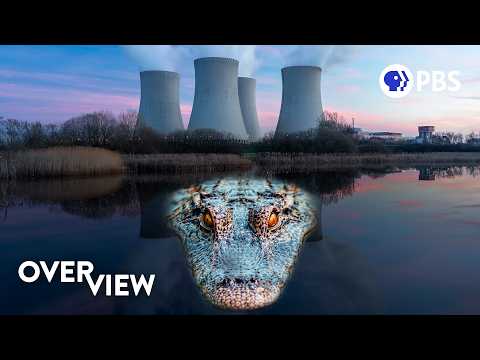
American crocodiles have found an unexpected sanctuary at Turkey Point Nuclear Power Plant in Florida, where a unique ecosystem has emerged, allowing their population to recover from near extinction. This blog explores how the cooling canals of the plant have become a critical habitat for these rare reptiles, highlighting the balance between industrial development and wildlife conservation.
In the United States, the only place where wild native crocodiles can be found is Florida. This unique environment is also home to both crocodiles and alligators, creating a fascinating dynamic in the animal kingdom. Among the most unexpected locations for these reptiles is the Turkey Point Nuclear Power Plant, where a surprising sanctuary has emerged for the American crocodile.
The American crocodile, a cousin of the Nile crocodile, is a native and rare species in Florida. Unlike the more common alligator, crocodiles are longer, possess narrower snouts with more visible teeth, and boast the strongest bite in the animal kingdom. Fossil evidence indicates that crocodilians have existed for over 80 million years, showcasing their resilience through time.
Historically, the population of American crocodiles in South Florida may have numbered over 3,000, but by the mid-1970s, their numbers had dwindled to just a few hundred. This decline was primarily due to habitat loss caused by human development.
Turkey Point Nuclear Power Plant, built in the 1960s to meet the energy demands of South Florida, has become an unexpected haven for crocodiles. The plant generates electricity for nearly one million homes, but its cooling canal system has created a unique ecosystem that supports the crocodile population.
The cooling canals at Turkey Point stretch for 168 linear miles and can even be seen from space. These canals are designed to remove excess heat from the nuclear plant, cycling water that cools as it travels through the system. Contrary to misconceptions, the water in these canals is not radioactive, allowing crocodiles to thrive in a safe environment.
The cooling canals have inadvertently provided essential resources for the crocodiles. They offer a habitat rich in prey, elevated berms for nesting, and a lack of human encroachment. This combination has made Turkey Point the most concentrated nesting area for American crocodiles in South Florida.
Crocodiles play a vital role in their ecosystem as apex predators. They help maintain the balance of the food chain by controlling the populations of other species. Unlike alligators, crocodiles can tolerate saltwater, which allows them to inhabit coastal and brackish environments that are often disrupted by human development.
As human activities encroached on their natural habitats, many crocodiles turned to Turkey Point for refuge, leading to a remarkable recovery of their population.
Dedicated individuals like Mike Lloret and his team have been instrumental in monitoring and studying the crocodile population at Turkey Point. Their work involves tracking the growth, health, and nesting behaviors of hundreds of crocodiles each year. This research is crucial for understanding the species and ensuring their continued survival.
Crocodiles typically lay between 20 to 50 eggs, but only a small percentage survive to adulthood due to predation. Monitoring nests and hatchlings is essential for assessing the health of the population. Mike and his team conduct nighttime surveys to track hatchlings, as their camouflage makes them nearly invisible during the day.
Each captured hatchling is carefully processed in a lab, where measurements are taken to assess their health. The team has tagged over 10,000 crocodiles, creating one of the most comprehensive data sets for any reptile species. This data allows researchers to track the movement and growth of individual crocodiles, contributing to the overall understanding of their ecology.
Since the inception of the crocodile conservation program in the 1970s, the population in South Florida has rebounded from a few hundred to over 2,000 individuals. This remarkable turnaround led to the American crocodile being downlisted from endangered to threatened status in 2007.
Turkey Point stands as a testament to the potential for industry and nature to coexist harmoniously. The success of the crocodile population in this unique environment illustrates that progress does not have to come at the expense of wildlife; rather, it can be achieved alongside it.
The story of the American crocodile at Turkey Point Nuclear Power Plant is a powerful reminder of the resilience of nature and the importance of conservation efforts. By creating a safe habitat for these remarkable reptiles, we can learn valuable lessons about the balance between human development and environmental stewardship. The future of the American crocodile looks brighter than ever, thanks to the unexpected sanctuary found in the shadow of a nuclear power plant.



















