
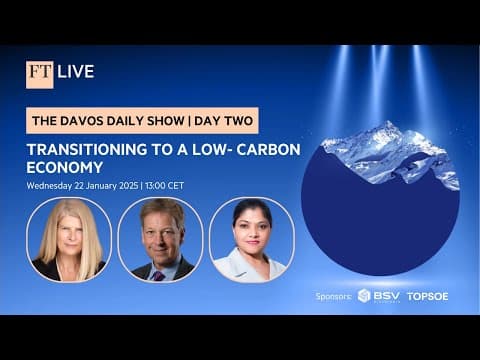
The second day of the Davos Daily Show focused on the implications of recent U.S. climate policy changes, the role of industry leaders in achieving Net Zero goals, and the importance of technology in accelerating the energy transition. Key discussions included the impact of Trump's presidency on global climate initiatives, the need for resilience in energy policies, and the potential of AI and blockchain technologies in driving sustainable practices.
Welcome to the second day of the Davos Daily Show, where we delve into the latest developments and challenges in climate and energy policies. Today, we will explore the implications of recent U.S. policy changes, the role of industry leaders in achieving Net Zero goals, and the importance of technology in accelerating the energy transition.
The day began with a discussion led by Pita Clark, an associate editor and climate expert, who highlighted the current climate and energy landscape. With a notable chill in the air and snow forecasted, the atmosphere in Davos reflects a sense of urgency regarding the energy transition and low-carbon economy. However, recent developments in Washington have cast a shadow over these discussions.
The Financial Times reported that approximately $300 billion worth of green infrastructure projects are now at risk due to President Trump's executive orders halting their progress. This has raised concerns among global leaders about the future of climate initiatives, especially given the U.S.'s significant role in the global economy.
Pita Clark emphasized that despite the shock of these policy changes, many European companies remain committed to climate action. However, there is a growing recognition that the world's largest economy's decisions will inevitably influence global climate strategies.
In an interview with Yacob Stome, CEO of Rio Tinto, the conversation shifted to the responsibilities of industry leaders in achieving Net Zero goals. Stome discussed the importance of critical minerals, such as copper and lithium, in the energy transition and the need for collaboration between governments and businesses to ensure sustainable practices.
As the energy transition slows, there is a pressing need for resilience in energy policies. Industry leaders are now focusing on growth and adaptability rather than solely on climate imperatives. This shift in language reflects a broader trend where businesses are prioritizing resilience in the face of changing political landscapes.
The panel discussion on accelerating the energy transition highlighted the potential of technology, particularly AI and blockchain, in driving sustainable practices. Experts agreed that while AI may consume significant energy, it also offers opportunities to improve energy efficiency and reduce overall consumption.
Kim Hedegaard, CEO of Topsoe, discussed how their technology converts renewable energy into clean fuels, emphasizing the importance of innovation in achieving sustainability goals. The panelists expressed optimism about the role of technology in creating a more efficient and sustainable energy landscape.
As the U.S. retreats from its previous climate commitments, the question arises: where will global leadership for the energy transition come from? The European Union is poised to take a leading role, but the divergence in policies between the U.S. and other nations, particularly China, presents challenges.
Despite the setbacks, there is a strong sentiment among global leaders that collaboration is essential. The discussions at Davos reflect a commitment to finding common ground and working together to address climate challenges, regardless of political shifts in major economies.
The second day of the Davos Daily Show underscored the complexities of navigating climate and energy policies in a rapidly changing political landscape. While the challenges are significant, the commitment to innovation, collaboration, and resilience offers a pathway forward. As we continue to explore these themes, it is clear that the global community must remain united in its efforts to combat climate change and transition to a sustainable future.



















