
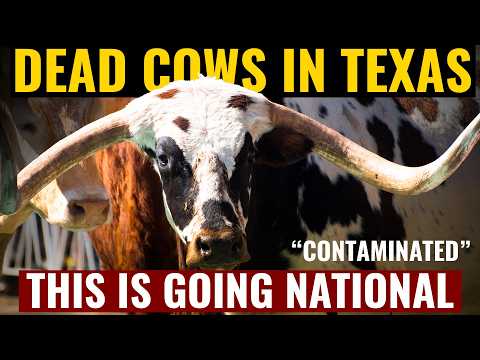
A lawsuit filed by Texas ranchers alleges that contamination from PFAS 'forever chemicals' in recycled municipal waste fertilizer is killing livestock and harming agriculture. This issue has escalated to emergency declarations and contract terminations, raising national concerns about PFAS contamination in farmland, regulatory challenges, and the future of sustainable agriculture.
On a ranch in Texas owned by Tony and Karen Coleman, a troubling phenomenon has been unfolding: cattle, horses, chickens, and other animals have been dying mysteriously. The Colemans, along with neighboring ranchers, filed a federal complaint in June 2024 alleging that contamination from nearby agricultural fields is responsible for the deaths and damage to their agricultural practices.
The contamination in question involves PFAS chemicals, often referred to as "forever chemicals" due to their persistence in the environment. This blog post explores the details of this case, the nature of PFAS chemicals, their impact on agriculture, and the broader implications for environmental policy and farming practices.
PFAS stands for per- and polyfluoroalkyl substances. These chemicals have been used since the mid-20th century in a variety of products including firefighting foam, non-stick cookware (like Teflon), waterproof clothing, grease-resistant food packaging, and industrial coatings. Manufacturers favor PFAS because they resist heat, oil, and water.
However, this durability means PFAS do not break down easily in the environment, persisting for decades. They are found everywhere—in rainwater, soil, wildlife, and even human blood. The Environmental Protection Agency (EPA) measures PFAS contamination in parts per trillion, with allowable limits as low as four parts per trillion in drinking water.
The Colemans and their neighbors allege that contamination from PFAS chemicals has entered their farmland, causing widespread animal deaths. The contamination is believed to stem from the use of recycled municipal waste processed into fertilizer by a company called Synagro. Synagro takes municipal waste and recycles it into fertilizer, a practice that has raised concerns about PFAS contamination.
While the lawsuit is unresolved and no definitive blame has been assigned, the theory is plausible. PFAS chemicals can enter wastewater systems and concentrate in the sludge, which is then spread on farmland as fertilizer. This practice potentially introduces high concentrations of PFAS into agricultural lands.
The issue escalated in February 2025 when Johnson County, Texas, declared an emergency due to PFAS contamination. The state began testing wells and soil, revealing a regional problem rather than an isolated incident.
In March 2025, the city of Fort Worth terminated its contract with Synagro to process municipal waste into fertilizer, citing concerns about legal exposure and contamination risks.
Bio solids are treated sewage sludge produced by wastewater treatment plants. These plants collect wastewater from homes, factories, hospitals, and other sources. During treatment, solids are removed, creating sludge that can be recycled as fertilizer.
In 1993, the EPA established Rule 503, allowing treated sludge to be spread on farmland. This was seen as a win-win: cities saved money on landfill space, farmers gained cheap fertilizer, and soil quality improved due to nutrients like nitrogen and phosphorus.
However, wastewater treatment plants were not designed to remove PFAS chemicals. As a result, PFAS can accumulate in bio solids and be spread on farmland, leading to contamination.
Maine: Several farms that historically used bio solids were found to have high PFAS concentrations. A dairy farmer named Fred Stone had milk testing far above EPA standards, forcing him to stop selling milk and eventually shut down his dairy operation. Many cows were euthanized due to contamination.
Michigan: Livingston County issued a beef consumption advisory due to PFAS contamination. Contaminated cows were removed from the food system during investigations.
These cases have brought national attention to the risks of PFAS contamination in agriculture.
Modern laboratories can detect PFAS at extremely low levels, which means PFAS are found almost everywhere. This ubiquity complicates regulatory decisions. If any detectable PFAS level leads to farmland restrictions, it could result in "regulatory land sterilization," where land loses value due to contamination fears, even if it remains productive.
Currently, there are no enforceable limits on PFAS concentrations in bio solids applied to farmland. The EPA released a draft sewage sludge risk assessment in January 2025, warning that some exposure scenarios could exceed acceptable risk thresholds, especially when bio solids are spread on arable land.
State lawmakers are debating how to regulate PFAS in bio solids, with some advocating for strict limits or bans. However, banning bio solids from farmland poses disposal challenges, as alternatives like landfilling or incineration have their own environmental and financial drawbacks.
Bio solids are applied to less than 1% of U.S. farmland annually. However, once PFAS enter the environment, they can spread beyond the initial application sites, amplifying contamination risks.
The Texas case and others highlight the need for a balanced approach to PFAS regulation. Ignoring the problem risks widespread contamination, while overregulation could threaten farmland viability and food production.
Scientists continue to study how PFAS behave in the environment, including how microbes might break them down in soil and water. Some suggest that regenerative farming practices that increase biodiversity and soil health could help degrade PFAS faster.
What began as a few dead cows on a Texas ranch has sparked a national conversation about PFAS contamination, environmental policy, and the future of agriculture. The challenge lies in protecting water and food safety while maintaining productive farmland.
As PFAS chemicals are pervasive, solutions must strike a balance between mitigating contamination and sustaining agricultural operations. Public awareness and scientific research will be crucial in navigating this complex issue.
The story of the Colemans' ranch is a wake-up call to the widespread presence of forever chemicals and the urgent need for thoughtful regulation and innovative farming practices to safeguard our environment and food supply.



















