
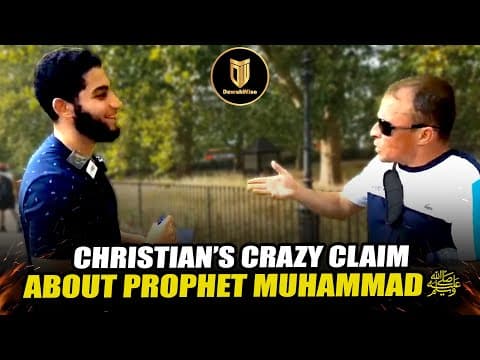
This blog post explores a heated debate between a Christian and a Muslim regarding the nature of prophets, the validity of religious texts, and cultural practices surrounding marriage. The discussion delves into the historical context of Prophet Muhammad's life, the interpretation of scripture, and the implications of cultural norms on religious beliefs.
In a recent discussion at Speakers Corner, a Christian and a Muslim engaged in a passionate debate about the nature of prophets, the validity of religious texts, and cultural practices surrounding marriage. This conversation highlights the complexities of faith and the differing interpretations of religious teachings.
The debate began with the Christian participant expressing strong disapproval of Prophet Muhammad, labeling him as the "most biggest sinner ever walked over this planet" due to his marriage to a young girl. The Muslim participant defended Muhammad, arguing that cultural norms of the time should be considered when evaluating historical figures.
The Muslim participant pointed out that marriage practices in 7th century Arabia were vastly different from contemporary standards. He emphasized that Prophet Muhammad's marriage to Aisha was not unusual for that era, where girls often married at a young age due to societal norms and life expectancy considerations.
The Christian participant challenged this perspective, questioning the morality of such practices. The Muslim responded by highlighting that many cultures throughout history have had different standards for marriage, and that judging past societies by modern values can be problematic.
The conversation shifted to scriptural interpretations, particularly regarding the characteristics of prophets. The Christian participant cited biblical verses to argue that Jesus is equal to God, while the Muslim participant countered with Islamic teachings that emphasize the equality of all prophets in the eyes of God.
The Muslim participant argued that sins do not disqualify someone from being a prophet, citing examples from the Old Testament where prophets made mistakes yet remained revered. This point was met with resistance from the Christian participant, who maintained that such actions disqualify Muhammad from being a true prophet.
The discussion also touched on the nature of revelation. The Muslim participant described how Prophet Muhammad received revelations from Angel Gabriel, asserting that there were eyewitnesses to these events. The Christian participant, however, remained skeptical, questioning the validity of these claims and the reliability of the sources.
The Muslim participant referenced Hadith literature to support his claims about the revelations. He argued that the presence of multiple witnesses lends credibility to the accounts of Muhammad's prophethood. The Christian participant, however, sought direct biblical references to support his beliefs about Jesus, emphasizing the need for scriptural backing in discussions of faith.
As the debate progressed, the participants explored the nature of God and the attributes of Jesus. The Christian participant argued that Jesus possesses divine qualities, while the Muslim participant contended that Jesus, in his human form, did not exhibit the same attributes as God. This led to a discussion about the implications of Jesus' mortality and knowledge.
The Muslim participant posed questions about Jesus' knowledge and immortality, pointing out that if Jesus was God, he should possess all knowledge and not be subject to death. The Christian participant attempted to reconcile these points by discussing the dual nature of Christ, but the Muslim participant remained unconvinced, insisting that contradictions in scripture undermine the argument for Jesus' divinity.
The debate concluded without a clear resolution, highlighting the deep-seated differences between the two faiths. Both participants expressed their views passionately, yet they remained entrenched in their beliefs. This conversation serves as a reminder of the complexities of faith, the importance of understanding cultural contexts, and the challenges of reconciling differing interpretations of religious texts.
In the end, the discussion at Speakers Corner exemplifies the ongoing dialogue between Christianity and Islam, revealing both the commonalities and the profound differences that shape these two major world religions.



















