
This blog post explores how the Gospel of Luke, particularly through the titles given to Mary, challenges the Protestant doctrine of Sola Scriptura by highlighting the importance of sacred tradition and the authority of the Church in understanding Christian faith.
The belief in Sola Scriptura, which posits that scripture alone is the sole authority in Christian life, faces significant challenges when examined through the lens of Luke 1. This blog post delves into the profound implications of the titles given to Mary by the angel Gabriel and Elizabeth, revealing how these insights not only affirm Catholic teaching but also expose the limitations of a scripture-only approach.
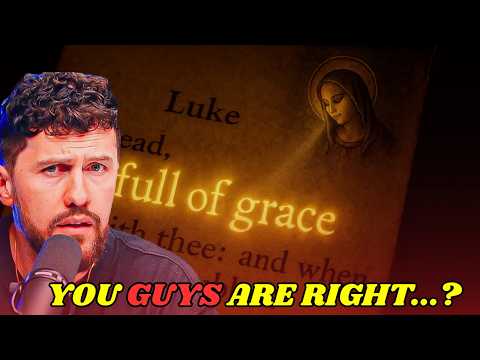
In Luke 1:28, the angel Gabriel greets Mary with the phrase, "Hail, full of grace, the Lord is with you." This title, "full of grace," is not mere poetic flattery. In Greek, the term is ketcharitomene, a perfect passive participle, indicating that Mary has been completely graced and continues to be so. This transformation defines her very identity; she is not just someone who possesses grace but is defined by it.
The uniqueness of this title is noteworthy, as no one else in scripture is referred to as ketcharitomene. Early Church Fathers, including St. Jerome, recognized this extraordinary designation, leading to the understanding of Mary as one preserved from sin by God's grace, a concept known as the Immaculate Conception. This presents a contradiction for proponents of Sola Scriptura, who often reject the implications of this title despite its biblical foundation.
Just a few verses later, in Luke 1:43, Elizabeth, filled with the Holy Spirit, exclaims, "And why is this granted to me that the mother of my Lord should come to me?" This declaration is both theological and prophetic. The Greek word used for "Lord" is kurios, which is the same term used in the Septuagint for the divine name of God. Elizabeth's proclamation acknowledges Mary as the mother of God, a title that the early Church affirmed at the Council of Ephesus in 431 AD.
The title Theotokos, meaning God-bearer, was established not as a means to elevate Mary but to protect the truth of Jesus' dual nature as fully God and fully man. If Jesus is God and Mary is His mother, then Mary is indeed the mother of God. This doctrine, however, is not explicitly stated in scripture but was clarified through sacred tradition and the authority of the Church, highlighting that scripture alone cannot fully encapsulate Christian truth.
While it is true that the term "mother of God" is not found verbatim in scripture, the concept is derived from multiple passages. Just as the doctrine of the Trinity is not explicitly stated but understood through various scriptural references, so too is Mary's role interpreted through the life of the Church.
Some argue that Mary was merely a vessel and her role ceased after Jesus' birth. However, Revelation 12 describes a woman clothed with the sun, bearing a male child destined to rule the nations. This imagery connects Mary to the ongoing life of the Church and her role as a spiritual mother to all believers.
In summary, Luke 1 reveals profound theological truths about Mary’s identity as one full of grace and the mother of the Lord. These insights challenge the notion of Sola Scriptura by demonstrating that the fullness of Christian truth requires both scripture and the interpretive authority of the Church. The next time the role of Mary is questioned, one should not only reference tradition but also point to the biblical text itself. Mary's significance is not a human invention but is rooted in the very word of God.



















