
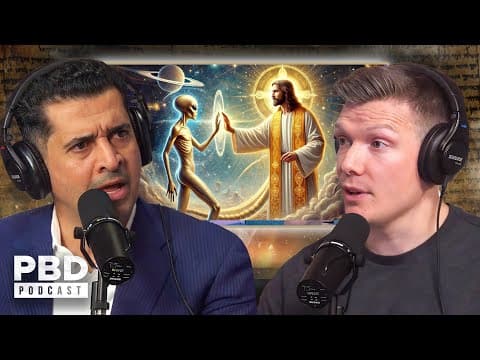
In a recent discussion, Wesley Huff addresses and debunks Billy Carson's controversial claims about Jesus, including the assertion that Jesus was an alien. Huff emphasizes the importance of historical accuracy and proper methodology in understanding biblical texts, while also expressing a willingness to engage in further dialogue with Carson.
In a recent online discussion, Wesley Huff confronted the controversial theories presented by Billy Carson regarding Christianity and the historical figure of Jesus. This conversation not only highlighted the differences in their interpretations but also underscored the importance of grounding claims in historical evidence and scholarly research.
Huff expressed openness to the idea of a follow-up discussion with Carson, suggesting that their previous interaction could serve as a precursor to a more in-depth, in-person dialogue. He acknowledged that Carson's claims about the Bible warrant correction, not out of personal vendetta, but from a desire to clarify misconceptions and promote accurate understanding of biblical texts.
Huff pointed out the challenges posed by the current digital landscape, where assertions are often made without substantial evidence. He likened this to constructing a building, where claims are akin to the roof—something that should be placed only after a solid foundation of rationale and evidence has been established. This metaphor illustrates the need for critical thinking and thorough investigation before accepting claims as truth.
During the conversation, Huff shared a personal anecdote about a friend who underwent a significant transformation after claiming to have "found Jesus." This story serves to illustrate the diverse paths individuals take in their spiritual journeys and the varying degrees of understanding and interpretation of religious texts.
Huff emphasized that many of Carson's arguments are not only novel but also lack historical credibility. For instance, Carson referenced the Gospel of the Holy 12 and the Gospel of Barnabas as evidence for his claims. Huff pointed out that these texts are widely recognized as forgeries or lacking historical provenance, thus undermining Carson's arguments.
The Gospel of the Holy 12, first serialized in the late 19th century, presents a vegetarian interpretation of Jesus' teachings but lacks any credible historical basis. Huff noted that relying on such texts to substantiate claims about Jesus is problematic and misleading.
Similarly, the Gospel of Barnabas is identified as a medieval forgery with numerous historical inaccuracies. Huff highlighted that this text has been misused to support claims that contradict established historical understanding.
Huff stressed the significance of employing proper methodologies in historical research. He argued that many of Carson's assertions stem from misunderstandings or misinterpretations of biblical texts and historical documents. By advocating for a rigorous approach to studying these texts, Huff aims to encourage others to engage with the evidence critically.
One of the most sensational claims made by Carson is that Jesus was an alien. Huff described this assertion as unfalsifiable, meaning it cannot be proven or disproven. He expressed concern that such claims could lead people away from credible historical understanding and foster doubt in the truth of Christianity.
In conclusion, Wesley Huff's response to Billy Carson's theories serves as a reminder of the importance of historical accuracy and critical thinking in discussions about faith and spirituality. By addressing misconceptions and advocating for evidence-based understanding, Huff hopes to guide others toward a more informed perspective on the historical figure of Jesus and the foundations of Christianity.
As the conversation around these topics continues to evolve, it remains crucial for individuals to seek out credible sources and engage in thoughtful dialogue to navigate the complexities of faith and history.



















