
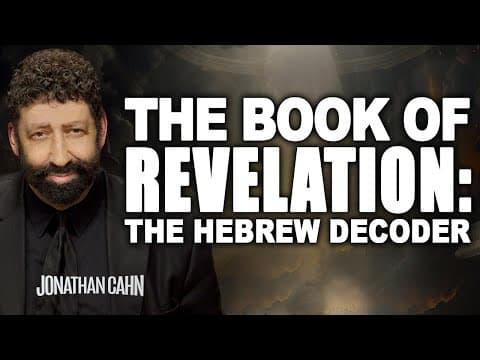
Jonathan Cahn's sermon on the Book of Revelation explores the symbolism of the seven golden lampstands, the significance of the Lamb, and the prophetic imagery connecting Revelation to the Hebrew Scriptures, emphasizing the church's Jewish roots and the victorious nature of the end times.
In his sermon, Jonathan Cahn delves into the profound symbolism and prophetic imagery found in the Book of Revelation. He emphasizes the connections between Revelation and the Hebrew Scriptures, revealing insights about the church, the nature of God, and the end times.
Cahn begins by discussing how the revelation of God on Earth is encapsulated in the four Gospels, each representing a different aspect of God's nature. He invites listeners to open their Bibles to Revelation 1:10, where John describes his vision on the Lord's Day. He hears a voice proclaiming, "I am the Alpha and the Omega, the first and the last." This voice instructs John to write down what he sees and send it to the seven churches in Asia.
John turns to see seven golden lampstands, which symbolize the seven churches. Cahn explains that the number seven is significant and connects to the Hebrew Scriptures, specifically Exodus 25, where God instructs the making of a lampstand for the temple. This lampstand, or menorah, represents the light of God and His people shining in darkness.
Cahn notes that the lampstand is not just a separate entity but can also be viewed as one unified structure with seven branches. This imagery signifies the church as a gathering of priests, illuminating the world with God's light. The menorah serves as a tangible symbol of the church, highlighting its Jewish roots, as it is also the national symbol of Israel.
Moving to Revelation 4:5, Cahn describes John's vision of God's throne, surrounded by flashes of lightning and peals of thunder. He draws parallels to Ezekiel's vision, where similar imagery is present. The four living creatures around the throne—each resembling a lion, calf, man, and eagle—are also discussed. Cahn connects these creatures to the four Gospels, suggesting that they represent different facets of Jesus Christ:
In Revelation 5, Cahn introduces the imagery of the Lamb standing as if slain, a powerful symbol of sacrifice and redemption. He traces the significance of the Lamb throughout the Bible, from Genesis to Revelation, emphasizing its central role in God's plan for humanity. The Lamb is not only a symbol of sacrifice but also represents the ultimate victory over sin and death.
Cahn highlights that the term "Lamb" appears more frequently in Revelation than in any other New Testament book, underscoring its importance. The Lamb's presence at the center of the throne signifies that God's reign is established through sacrifice and love.
As Cahn progresses to Revelation 6, he discusses the breaking of the seals and the emergence of the Four Horsemen. He connects this imagery to the Book of Zechariah, where similar horsemen patrol the Earth. Cahn suggests that while Zechariah's horsemen maintain order, the Four Horsemen in Revelation signify a removal of peace and the onset of chaos.
In Revelation 7, Cahn speaks about the sealing of 144,000 servants from the tribes of Israel. He addresses misconceptions about the identity of these tribes, emphasizing that God knows who belongs to each tribe, regardless of historical losses. This sealing represents God's protection over His people during tumultuous times.
Cahn then transitions to Revelation 8, where the seventh seal is broken, leading to silence in heaven and the preparation of seven trumpets. He draws a parallel to the Book of Joshua, where seven priests blow trumpets to bring down the walls of Jericho. Cahn interprets the trumpets in Revelation as a call to victory rather than fear, framing the narrative as an entry into the promised land rather than a warning of doom.
Cahn concludes his sermon by encouraging believers to adopt a mindset of victory. He emphasizes that the Book of Revelation is not about fear but about entering into something better. The end-time generation is called to be bold and confident, fighting for their faith and advancing God's kingdom.
Through his exploration of the Book of Revelation, Jonathan Cahn reveals the intricate connections between the Old and New Testaments, urging the church to embrace its Jewish heritage and to live in the light of God's promises.



















