
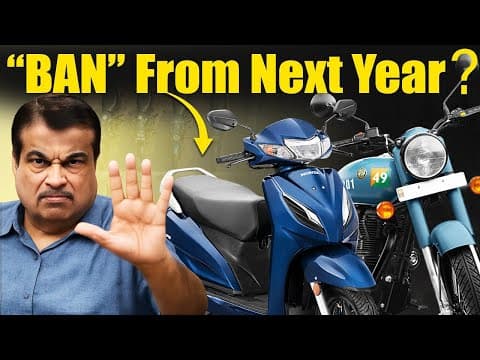
The Delhi government is considering a ban on petrol and CNG 2-wheelers to promote electric vehicles (EVs), aiming for 95% of vehicles to be electric. This move raises concerns about infrastructure, job losses, and the practicality of such a sudden transition.
As the Delhi government contemplates a ban on petrol and CNG 2-wheelers starting next year, potential buyers are urged to act quickly. This proposed legislation could mean that popular models like the Activa and Splendor, as well as enthusiast motorcycles from brands like Royal Enfield and KTM, may no longer be available for purchase in the capital. The government's ambitious goal is to ensure that 95% of all vehicles in Delhi are electric, a move that could have far-reaching implications not just for the city but for the entire country.
The 2-wheeler segment is a significant part of the Indian automobile market, accounting for 75% of the country's automobile production. In Delhi alone, there were approximately 8.24 million registered 2-wheelers as of 2021, with projections indicating this number could reach nearly 9.25 million by 2025. To put this in perspective, Japan's total registered 2-wheelers are around 10 million, while the entire United States has only about 8.8 million registered 2-wheelers. This highlights the immense scale of the 2-wheeler market in Delhi, which is larger than that of many developed countries.
Currently, 88% of 2-wheelers sold in India are powered by internal combustion engines, with only 12% being electric. Despite this, the Delhi government is pushing for a transition to electric vehicles, particularly in the 2-wheeler segment, which has seen a remarkable annual growth rate of 33%. In 2024, electric 2-wheeler sales reached 1.14 million units, indicating a growing acceptance of EVs among consumers.
However, the proposed ban raises several questions about the feasibility and timing of such a drastic shift. The government aims to implement this change within a short timeframe, which many experts consider unrealistic given the current market dynamics.
The sudden ban on petrol 2-wheelers could severely impact major manufacturers who have long dominated the Indian market. Companies like TVS, Bajaj, and Hero have limited electric offerings, with most of their portfolios still heavily reliant on petrol-powered vehicles. This shift could jeopardize their market positions and lead to significant job losses in the industry.
One of the most pressing issues is the lack of adequate EV infrastructure in Delhi. Currently, there are insufficient charging stations to support a sudden influx of electric vehicles. Many residents live in housing societies that do not permit EV charging due to safety concerns, further complicating the transition.
For consumers, the ban could mean having to choose between expensive electric 2-wheelers or less reliable, cheaper alternatives. The current market does not offer a wide range of practical electric motorcycles, particularly for those who enjoy the thrill of riding high-performance bikes. The emotional connection and passion associated with traditional motorcycles cannot be easily replicated by electric models.
While the goal of reducing pollution in Delhi is commendable, experts argue that a gradual transition to electric vehicles is essential. Strengthening the charging infrastructure and addressing other pollution sources, such as stubble burning and industrial emissions, should be prioritized. A phased approach would allow consumers to adapt to EVs while ensuring that the automotive industry can transition smoothly without significant disruptions.
The proposed ban on petrol 2-wheelers in Delhi represents a bold step towards a greener future, but it is fraught with challenges that need careful consideration. The government must balance environmental goals with the realities of consumer needs, industry capabilities, and infrastructure readiness. A gradual transition, coupled with robust support for both consumers and manufacturers, could pave the way for a successful shift to electric mobility in India.



















