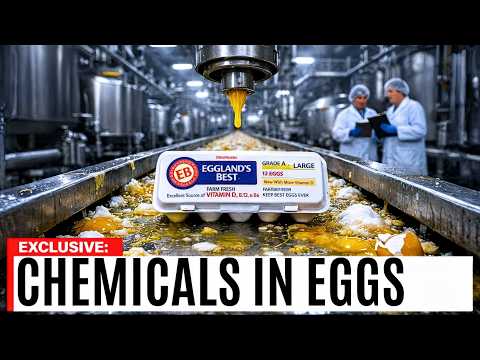
Egg prices have soared in the US, with major producers profiting immensely amid allegations of price fixing and misleading labeling. Investigations and lawsuits reveal that many popular egg brands misrepresent their products' conditions, such as cage-free or organic claims, while some have faced serious safety recalls. Consumers are urged to scrutinize egg labels carefully as the industry faces legal and ethical challenges.
Eggs have long been a trusted staple in American households, cherished for their affordability and nutritional value. However, the landscape of egg production and pricing has dramatically changed in recent years. By early 2025, the average price of a dozen eggs surged to $6.23, with some regions seeing prices exceed $10. This spike has coincided with record profits for egg producers and growing scrutiny over industry practices.
The largest egg producer in the United States reported quarterly profits increasing by over 340% within a single year. Meanwhile, the Department of Justice (DOJ) launched an antitrust investigation into whether the egg industry collectively manipulated prices, attributing increases to bird flu outbreaks.
Egg cartons often feature labels such as "cage-free," "free range," "pasture-raised," and "organic." However, lawsuits, court documents, and undercover investigations have exposed that many of these terms are misleading or lack meaningful standards.
Below are eight egg brands and companies that have been implicated in controversies involving misleading claims, safety issues, or unethical practices.
Walmart does not own farms but contracts with producers like Cal-Maine Foods, the largest egg producer in the US controlling over 20% of the market. In 2018, a class action lawsuit alleged that Walmart's organic Marketside eggs, marketed as having outdoor access, were actually produced in industrial multi-story barns where less than 1% of hens could see the outdoors. The "outdoor access" was limited to enclosed screened porches.
Consumers paid nearly double for these eggs compared to conventional ones, despite the misleading label. Walmart has faced multiple lawsuits for overcharging and misleading labeling, including settlements totaling over $50 million between 2024 and 2025.
Egglund's Best markets its cage-free eggs with claims that hens roam freely in pleasant natural environments. However, a federal class action lawsuit in Chicago alleges that hens are confined indoors in crowded, windowless concrete facilities. The company argued that the label's language was vague and not meant to be taken literally.
Cage-free eggs typically cost about 7% more than conventional eggs, with some Egglund's products carrying a 25% premium. The lawsuit contends that consumers are misled into believing hens live better lives than they actually do.
In November 2024, Handsome Brook Farms voluntarily recalled 10,800 units of organic pasture-raised eggs sold under Costco's Kirkland Signature brand due to contamination. The eggs were mistakenly packaged for retail despite not being intended for sale. The FDA later classified the recall as Class One, indicating a reasonable probability of serious health consequences or death due to Salmonella contamination.
Handsome Brook Farms has received significant private equity investment and supplies eggs nationwide under various brands. The recall raised concerns about quality control and safety in rapidly growing operations.
Owned by Pete and Jerry's Organics, Nelly's Free Range Eggs feature idyllic images of hens outdoors. However, an undercover investigation revealed supplier farms confining approximately 20,000 hens in crowded sheds with minimal space, barely larger than the birds themselves.
A federal class action lawsuit alleges consumers were misled by false depictions of farm conditions. The investigation also documented practices such as beak trimming and the killing of male chicks. Spent hens are sold to industrial slaughterhouses, similar to conventional operations.
Vital Farms positions itself as a premium ethical egg brand, with cartons priced between $7 and $14. The company markets hens as spending their days outdoors on grass, eating bugs, and living well. However, a 2021 consumer lawsuit alleged misleading marketing compared to supplier farm conditions.
During litigation, Vital Farms was sanctioned for issuing overly broad subpoenas to animal rights groups. In late 2025 and early 2026, social media backlash followed third-party lab tests revealing high linoleic acid levels in their eggs, traced to corn and soybean feed rather than natural foraging.
Consumers accused the brand of greenwashing, and similar research in Canada found that only 14% of consumers correctly identified that cage-free and free-range hens are often kept indoors.
In June 2025, the CDC and FDA announced a multi-state Salmonella outbreak linked to eggs from August Egg Company in California. Approximately 1.7 million eggs were recalled across nine states, sold under various brand names at major retailers including Walmart and Safeway.
The outbreak sickened 79 people, hospitalized 21, but caused no deaths. August Egg Company began pasteurizing eggs and implementing corrective actions. The recall highlighted the complexity of the egg supply chain, where the producing company is often invisible to consumers.
Cal-Maine Foods is the largest shell egg producer and distributor in the US, controlling over 20% of the market with $3.1 billion in sales and $1.2 billion in profit in its most recent fiscal year. It supplies eggs to Walmart, Kroger, Costco, and others.
In March 2025, the DOJ opened an antitrust investigation into major egg producers over soaring prices. A class action lawsuit filed in November 2025 accuses Cal-Maine and others of conspiring to fix prices between January 2022 and March 2025, using a shared analysis platform to coordinate pricing.
Egg prices increased by as much as 270% despite falling feed and fuel costs. After the investigation became public, wholesale prices dropped over 60%, undermining claims that bird flu justified the increases. Cal-Maine previously lost a $53 million price-fixing case in 2023.
The company's board chair's stock portfolio grew by nearly $10 million during the price surge. Cal-Maine is also the supplier behind Walmart's Marketside Organic Eggs and has faced lawsuits for misleading labeling.
The entire egg industry operates within a system designed to confuse consumers. Labels like "cage-free," "free range," "pasture-raised," and "organic" often do not guarantee the conditions consumers expect:
Approximately 60% of US laying hens remain confined to battery cages, with less than 67 square inches per bird—smaller than a sheet of paper.
The five largest producers control over 90% of US egg production. The DOJ investigation and multiple lawsuits reveal a pattern of price fixing, misleading marketing, and safety issues.
Every time consumers purchase eggs, they trust a system fraught with legal challenges, misleading labels, and safety recalls. The labels are crafted to make buyers feel good, but the corporations behind them prioritize profit. It is crucial for consumers to critically evaluate egg carton claims and question who writes these labels and why.
The truth about egg production is complex and often hidden behind marketing language. Awareness and scrutiny are essential for making informed choices in the egg aisle.