
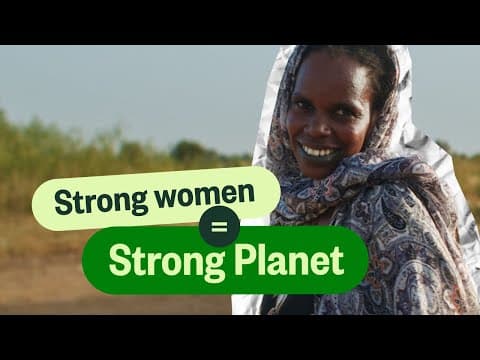
Ecosia's conservation projects demonstrate that empowering women leads to faster and more effective environmental initiatives. Studies show that women reinvest more into their families and communities, resulting in better conservation outcomes and sustainable livelihoods.
For over 15 years, Ecosia has been dedicated to planting and protecting forests around the globe. A significant observation has emerged from these efforts: when women are empowered to lead, projects not only progress more swiftly but also yield better overall results. This insight is supported by decades of research, highlighting the critical role women play in environmental conservation and community development.
Research from the World Bank reveals a striking statistic: when women control household income generated from conservation projects, they reinvest up to 90% of it back into their families. In contrast, men typically reinvest only 30-40%. This reinvestment has profound implications for families, leading to improved education, healthcare, and access to essential resources like cooking stoves. Such advancements enable families to build sustainable livelihoods, thereby reducing their dependence on forests for necessities such as charcoal.
Further studies conducted in Nepal and India indicate that forests managed by groups with a higher proportion of women achieve significantly better conservation outcomes. These areas experience less deforestation and a quicker recovery of biodiversity. The evidence is clear: women's leadership in environmental management is not just beneficial; it is essential for effective conservation.
In my decade-long experience working with Ecosia, I have witnessed firsthand the remarkable contributions of women in conservation. Some of the most well-organized tree nurseries and community planting groups have been led by women. Notable figures such as Marcela, Malati, and Neema exemplify this trend, showcasing the strength and effectiveness of female leadership in environmental initiatives.
In rural areas, where many of Ecosia's projects are based, traditional gender roles often dictate that men work in neighboring cities, leaving women to manage household responsibilities. This dynamic fosters deeper community ties among women, enabling them to build stronger social networks and think collectively—an essential factor in restoring public spaces and managing resources effectively.
While the focus on women's empowerment is crucial, it is important to acknowledge the contributions of men in these projects. Individuals like Sangaré, MrSeck, Piet, Steve, and Martin play vital roles as well. However, the key issue remains that women are often overlooked in decision-making processes, which not only perpetuates inequality but also hinders progress in conservation efforts.
One inspiring example of women's leadership in conservation is Oumou, whom we met in Bakel, Senegal. During our visit to our partners, Hommes et Terre, we learned about their efforts to restore some of the most challenging soils. Oumou's community was the first to collaborate with Hommes et Terre, a decision that was not taken lightly, as many communities are understandably skeptical of outside organizations.
Oumou plays a pivotal role in uniting her community to address severe water scarcity and other issues linked to deforestation. Her leadership and ability to foster trust among community members are instrumental in the success of their conservation initiatives.
The evidence is clear: empowering women in conservation not only enhances project outcomes but also fosters sustainable development within communities. As we continue to support initiatives that prioritize women's leadership, we can expect to see significant advancements in environmental conservation and community resilience. The journey towards a more equitable and sustainable future is one that must include the voices and leadership of women.
In our upcoming content, we will share the full, uncut interview with Oumou, allowing her to share her insights and experiences in her own words. Stay tuned for this enlightening conversation that highlights the importance of women's roles in conservation efforts.



















