
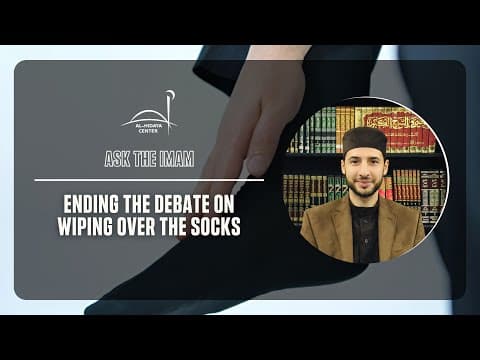
This blog post clarifies the Islamic ruling on wiping over socks during ablution (wudu), addressing common misconceptions and providing guidance based on scholarly opinions. It emphasizes the importance of understanding the differences in opinions among scholars and the practical implications for modern Muslims.
In recent times, many Muslims have expressed confusion regarding the practice of wiping over socks during ablution (wudu). This blog post aims to clarify this issue, addressing the various opinions among scholars and providing a comprehensive understanding of the practice.
It is crucial to recognize that certain issues in Islamic jurisprudence are agreed upon by scholars, while others are subject to debate. The practice of wiping over socks is one such issue where there is a consensus among scholars regarding specific conditions. Over 75 companions of the Prophet Muhammad (peace be upon him) reported that he practiced wiping over socks, which were typically made of leather during his time.
There are two main scenarios where wiping over socks is unanimously accepted:
The primary area of dispute arises when considering modern socks made from materials such as cotton or wool. The main concern is whether water can penetrate these materials to reach the skin. The majority of reports regarding the practice of wiping over socks pertain to leather, leading to differing opinions on whether this practice can be extended to modern fabrics.
In today's world, many Muslims face challenges when performing wudu in public spaces, such as workplaces or gas stations. The embarrassment of removing shoes and socks in front of others can lead to neglecting prayers. Therefore, it is essential to understand that wiping over socks is a valid and practical option for maintaining one's prayer schedule.
To wipe over socks, certain conditions must be met:
According to Islamic jurisprudence, the time limit for wiping over socks is as follows:
The counting of these hours begins from the moment one loses wudu, not from when the socks were put on.
What if someone removes their socks after wiping?
If a person wipes over their socks and then removes them, their wudu is invalidated. If this happens shortly before prayer, they can simply wash their feet. If a significant amount of time has passed, they must perform wudu again.
Can women wipe over their hijabs?
Yes, if it is inconvenient for women to remove their hijabs for wudu, they can wipe over their heads as a concession, similar to how the Prophet Muhammad (peace be upon him) allowed for partial wiping over his turban.
The practice of wiping over socks is a valid and practical solution for many Muslims today. While there are differing opinions among scholars, it is essential to approach this issue with understanding and respect for the diversity of thought within the Islamic tradition. Ultimately, the goal is to facilitate worship and obedience to Allah, making it easier for Muslims to maintain their religious obligations in modern life.
This reminder serves not to convince anyone of a particular stance but to highlight the flexibility and concessions within Islamic law that can accommodate the needs of contemporary Muslims.



















