
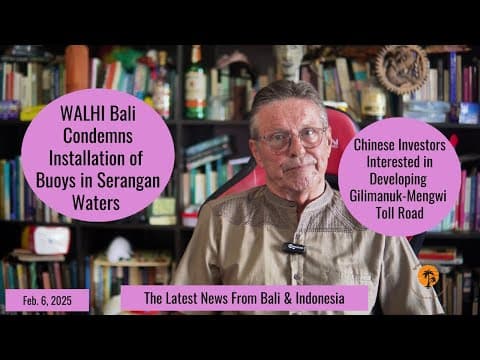
This blog post discusses the recent condemnation of buoy installations in Serangan waters by WALHI Bali, the implications for local fishermen, and the ongoing developments regarding the Gilimanuk-Mengwi toll road project, including the interest from Chinese investors and the challenges faced in land acquisition and compensation.
In recent weeks, Bali has been at the center of significant environmental and infrastructural discussions. This post delves into two major stories: the condemnation of buoy installations in Serangan waters by WALHI Bali and the ongoing developments regarding the Gilimanuk-Mengwi toll road project, which has attracted interest from Chinese investors.
WALHI Bali, an environmental advocacy group, has raised serious concerns regarding the installation of buoys in the waters of Serangan. These buoys, installed by PT Bali Turtle Island Development (BTI), are suspected of privatizing public waters, which has sparked outrage among local communities and environmental observers.
WALHI Bali urges policymakers, including the governor and the president, to side with the local community and demand the removal of the buoys. They also call for a reevaluation of BTI's investment activities and the approval of marine space utilization.
The Gilimanuk-Mengwi toll road project has been a topic of interest, particularly with the recent involvement of Chinese investors. The toll road aims to alleviate traffic congestion in Bali and promote economic growth across the island.
Despite the challenges, the estimated investment for the toll road is projected to be around 25.4 trillion rupiah. The toll road is expected to significantly reduce travel time from Gilimanuk port to Dempasar and help distribute economic growth more evenly across Bali.
As of early 2025, Bali's inflation rate stands at 2.41%, slightly up from 2.34% in December 2024. While this remains within the target of 2.5%, food prices have seen significant increases, prompting concerns from Bank Indonesia.
Bank Indonesia has called for enhanced collaboration and innovation among regional inflation control teams to mitigate food price increases and ensure price stability.
The environmental and infrastructural developments in Bali highlight the ongoing tensions between corporate interests and local communities. As WALHI Bali continues to advocate for the rights of local fishermen and businesses, the future of the Gilimanuk-Mengwi toll road project remains uncertain amid financial and logistical challenges. The situation calls for careful monitoring and proactive measures to ensure that the interests of the local population are prioritized in the face of rapid development.



















