
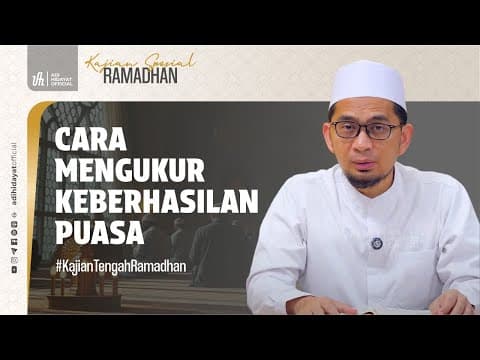
This blog post explores the significance of fasting during Ramadan, emphasizing the importance of measuring the success of one's fasting through the lens of increased piety (taqwa) as outlined in the Quran and Hadith. Ustadz Adi Hidayat discusses the spiritual and moral dimensions of fasting, providing insights on how to enhance one's character and faith during this holy month.
In the spirit of Ramadan, Ustadz Adi Hidayat addresses the importance of evaluating our fasting practices as we reach the midpoint of this holy month. He emphasizes that the essence of fasting is not merely abstaining from food and drink but rather enhancing our spiritual and moral character through increased piety (taqwa).
Ramadan is a month of reflection, prayer, and community. As we enter the second half of this sacred period, it is crucial to assess how well we are fulfilling the obligations of fasting. Ustadz Hidayat reminds us that fasting is a means to achieve greater piety, as stated in the Quran:
"O you who have believed, decreed upon you is fasting as it was decreed upon those before you that you may become righteous." (Quran 2:183)
This verse highlights that the ultimate goal of fasting is to cultivate taqwa, or piety, which serves as a measure of our success in this spiritual practice.
Taqwa can be defined as the accumulation of positive values and moral integrity within oneself. It manifests through obedience to Allah's commands and avoidance of His prohibitions. Ustadz Hidayat explains that the Quran presents taqwa as an active state, urging believers to engage in actions that enhance their spiritual well-being.
Fasting during Ramadan is a unique opportunity to develop taqwa. It serves as a training ground for self-discipline and moral fortitude. Ustadz Hidayat elaborates on how fasting helps individuals confront their desires and urges, ultimately leading to a more virtuous life. He states:
"Fasting is not just about abstaining from food; it is about nurturing the soul and enhancing our moral character."
As we reflect on our fasting practices, Ustadz Hidayat encourages us to evaluate three key elements:
To maximize the benefits of fasting, Ustadz Hidayat suggests several practical steps:
As we continue through Ramadan, it is essential to evaluate our fasting practices and strive for improvement. The ultimate goal is to emerge from this month with a heightened sense of taqwa, which will guide us in our daily lives beyond Ramadan. Ustadz Adi Hidayat reminds us that fasting is a holistic practice that nurtures the body, mind, and spirit, leading us to a more fulfilling and righteous life.
In closing, let us commit to enhancing our spiritual journey during this blessed month, ensuring that our fasting translates into lasting positive change in our lives. May Allah accept our efforts and guide us on the path of righteousness.



















