
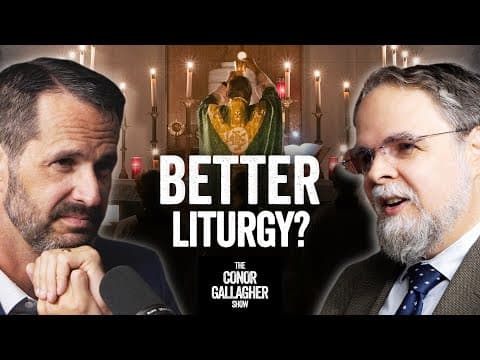
This blog post explores the significant differences between the Novus Ordo and the Traditional Latin Mass (TLM) as discussed by Dr. Peter Kwasniewski. It highlights the historical context, doctrinal implications, and the impact of liturgical changes on the Catholic Church over the past 60 years. The post argues for the importance of the TLM in preserving Catholic tradition and faith amidst contemporary challenges.
The Catholic Church has undergone significant changes in the past 60 years, particularly regarding its liturgical practices. This blog post delves into the differences between the Novus Ordo and the Traditional Latin Mass (TLM), as articulated by Dr. Peter Kwasniewski. It explores the historical context, doctrinal implications, and the impact of these liturgical changes on the Catholic Church.
The liturgical reforms initiated in the 1960s have been marked by a series of ruptures within the Church. Since the 1960s, there has been a notable decline in various aspects of Catholic life, including education, clergy numbers, and sacramental practices. Dr. Kwasniewski argues that if a corporation experienced a 50% loss in customers and employees, it would prompt an immediate reevaluation of its direction. Similarly, the Catholic Church must consider whether it has strayed from its traditional roots.
April 3, 1969, is identified as a pivotal date when Pope Paul VI released the apostolic constitution Missale Romanum, which introduced the Novus Ordo. This marked a significant departure from 16 centuries of Roman Catholic worship. The changes made were not merely cosmetic; they represented a fundamental shift in the Church's approach to liturgy and worship.
Dr. Kwasniewski outlines several critical differences between the Novus Ordo and the TLM, which can be categorized into eight main elements:
In the TLM, the priest celebrates the Mass ad orientem (facing east), symbolizing a communal orientation towards God. In contrast, the Novus Ordo often features the priest facing the congregation, which can shift the focus from God to the community, altering the nature of the worship experience.
The TLM utilizes a single, fixed Eucharistic prayer, the Roman Canon, which has been used for centuries. The Novus Ordo, however, offers multiple Eucharistic prayers, including a simplified version that lacks the depth and richness of the traditional prayers.
The TLM emphasizes the sacrificial nature of the Mass, with a clear distinction between the priest's communion and that of the congregation. The Novus Ordo conflates these, which can dilute the understanding of the Mass as a sacrifice.
In the TLM, only the priest or deacon handles the consecrated elements, ensuring a high level of reverence. The Novus Ordo allows for extraordinary ministers of Holy Communion, which can lead to a more casual approach to the Eucharist.
The TLM maintains a clear hierarchical structure, with the priest acting in persona Christi (in the person of Christ) during the Mass. The Novus Ordo often emphasizes a communal aspect, which can blur the lines of this hierarchy.
Traditional church architecture reflects the sacred nature of the liturgy, with distinct areas for the clergy and laity. The Novus Ordo has led to more flexible and less defined spaces, which can diminish the sense of the sacred.
Gregorian chant is integral to the TLM, enhancing the liturgical experience and connecting worshippers to the Church's rich musical heritage. The Novus Ordo treats chant as optional, which can lead to a less cohesive worship experience.
The TLM employs an elevated linguistic mode, using Latin to convey the sacredness of the liturgy. The Novus Ordo often uses vernacular languages, which can make the liturgy feel more accessible but may also strip it of its transcendent qualities.
Dr. Kwasniewski believes that the rediscovery of the TLM is a movement of the Holy Spirit, reminding the Church of its rich patrimony. Despite attempts to suppress the TLM, it continues to flourish in various parts of the world. The younger generation is increasingly drawn to the beauty and reverence of traditional liturgy, seeking a deeper connection to their faith.
The differences between the Novus Ordo and the Traditional Latin Mass are profound and reflect broader theological and cultural shifts within the Catholic Church. As the Church navigates these changes, the TLM stands as a testament to the enduring beauty and depth of Catholic worship. The future may hold a renewed appreciation for tradition, as more Catholics seek to reconnect with their heritage and the richness of the faith.



















