
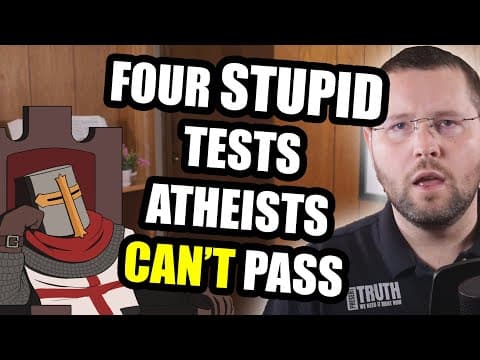
This blog post explores the arguments presented by Pastor Benjamin Feagan regarding the four tests of truth that atheism allegedly fails. It critiques the definitions and assumptions surrounding atheism, discusses the nature of morality, and evaluates the practical implications of atheistic worldviews.
In a world where beliefs about existence and morality are often debated, the discussion surrounding atheism and theism remains particularly contentious. Pastor Benjamin Feagan presents a provocative argument claiming that atheism fails four essential tests of truth. This blog post will delve into these claims, critically analyzing the arguments and assumptions made about atheism.
Atheism is often misunderstood. It is not merely a rejection of theism but encompasses a range of beliefs about existence and morality. Many atheists do not assert with absolute certainty that there is no God; rather, they express skepticism about the existence of deities as described in various religions. This distinction is crucial in understanding the subsequent arguments.
Feagan outlines four tests that he believes atheism must pass to be considered a valid worldview: correspondence, consistency, comprehensiveness, and practical application. Let’s explore each of these tests in detail.
The correspondence test evaluates whether a worldview aligns with observable reality. Feagan argues that atheism claims the universe emerged from nothing without a cause, which he asserts is a flawed premise. However, atheism does not inherently make claims about the origins of the universe; rather, it simply posits that belief in a deity is not necessary to explain existence. The assertion that everything with a beginning must have a cause is challenged by quantum mechanics, where phenomena can appear to exist without a clear cause.
The consistency test examines whether a worldview contradicts itself. Feagan suggests that atheism is inconsistent because it claims morality is subjective, yet atheists often argue against practices like slavery. However, the subjective nature of morality does not negate its existence; rather, it reflects the diverse values held by individuals and societies. The argument that morality must come from a divine source is countered by the observation that moral principles can evolve through social and cultural contexts.
This test asks whether a worldview can explain the big questions of life. Feagan claims that atheism fails to provide satisfactory answers regarding the origin of life and the complexity of existence. However, atheism does not claim to have all the answers; instead, it encourages inquiry and scientific exploration. The complexity of life, including DNA, can be explained through naturalistic processes, which are continually being studied and understood through scientific advancements.
Finally, the practical application test assesses whether a worldview can function effectively in real life. Feagan argues that atheism cannot provide a foundation for morality or meaning. Yet, countless individuals lead fulfilling lives grounded in atheistic principles, demonstrating that atheism can indeed offer a coherent framework for living. Many atheists find purpose and ethical guidance through humanistic values and empathy rather than divine command.
The arguments presented by Pastor Feagan regarding the four tests of atheism reveal a misunderstanding of what atheism entails and how it functions as a worldview. While he asserts that atheism collapses under scrutiny, a closer examination shows that atheism is a nuanced belief system that can coexist with a meaningful and moral life. The discussion surrounding atheism and theism is complex, and it is essential to engage with these ideas thoughtfully and respectfully, recognizing the diversity of beliefs that shape our understanding of existence and morality.



















