
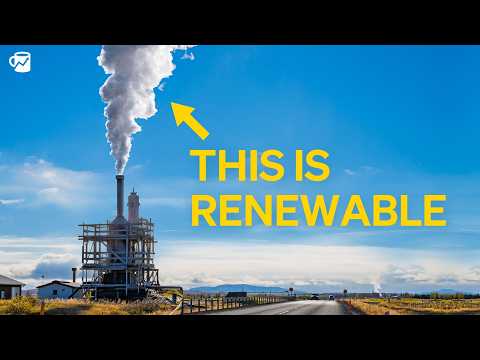
Geothermal energy, America's most abundant energy source, remains underutilized despite its potential to meet significant electricity demands. This blog explores the history, technology, and future of geothermal energy, highlighting its advantages and challenges in becoming a mainstream energy source.
Donald Trump famously promotes the mantra "drill, baby, drill," but what exactly are we drilling for? The primary focus has been on natural gas and oil, with the U.S. both exporting and importing oil. However, beneath our feet lies a more abundant energy source: geothermal energy. This blog delves into the potential of geothermal energy, its history, technological advancements, and the challenges it faces in becoming a significant player in America's energy landscape.
Geothermal energy is generated from the Earth's internal heat, which is accessible by drilling deep underground. In the U.S., geothermal energy currently accounts for only a fraction of energy production—about a tenth of a percent. Despite its vast potential, tapping into this resource has historically been neither physically nor economically feasible. However, recent advancements suggest that this could change.
The journey of geothermal energy began over a century ago. The first attempts to harness this energy involved dry steam plants, which convert steam from hot water into electricity. These plants are typically located near volcanic regions or tectonic plate boundaries, where heat is closest to the surface. For instance, the Geysers in California, one of the first geothermal plants, began operations in the 1960s and saw significant production increases over the years.
In 1973, amidst the oil embargo, optimism for geothermal energy surged, with predictions that it could provide 10-20% of the nation's electricity by 1985. However, these predictions fell short as oil prices dropped and geothermal technology struggled to scale.
As the geothermal industry faced limitations, new technologies emerged. The introduction of flash steam technology allowed for the use of hot water that wasn't quite steam, enabling more geothermal sites to be utilized. However, as the most accessible sites were developed, the industry needed to innovate further.
In the early 1980s, binary cycle plants revolutionized geothermal energy by using a secondary working fluid that vaporizes at lower temperatures. This innovation expanded the potential for geothermal energy beyond rare, super-hot reservoirs.
The next significant leap came with Enhanced Geothermal Systems (EGS), which utilize modern drilling techniques borrowed from the oil and gas industry. By applying horizontal drilling and hydraulic fracturing, companies like Fervent Energy are working to unlock geothermal resources more efficiently. This approach allows for the rapid heating of water in hot rock formations, significantly increasing energy production potential.
Today, companies are pushing to scale geothermal energy production. Fervent Energy's project in the Utah desert aims to generate two gigawatts of power, enough to supply over two million homes. Major players like Calpine and Chevron are also investing in new geothermal projects, supported by government funding.
Despite these advancements, the geothermal industry faces challenges. While it is a reliable baseload power source—providing consistent energy unlike intermittent sources such as solar and wind—geothermal energy has not seen the same level of investment and policy support as other renewables.
Government policy plays a crucial role in the growth of the geothermal sector. The Department of Energy has historically focused on solar and wind energy, leaving geothermal as a lesser priority. Advocates argue that geothermal energy deserves more attention due to its potential for job creation and its role in the clean energy transition.
Geothermal energy is appealing to both sides of the political spectrum: it is a clean energy source favored by Democrats and a drilling method that resonates with Republicans. However, the industry must overcome the perception that it is a forgotten energy source.
One of the significant concerns surrounding geothermal energy is the risk of induced seismicity. Similar to the oil and gas industry, geothermal projects can trigger earthquakes due to the movement of fluids underground. Notable incidents in South Korea and Switzerland have raised public concerns, leading to project cancellations and increased scrutiny.
Despite these challenges, proponents argue that the risks associated with geothermal energy can be managed, just as the oil and gas industry has learned to mitigate its own risks. The key lies in understanding and addressing the seismicity issues while continuing to innovate.
Geothermal energy has the potential to play a significant role in America's energy future. With advancements in technology, a transitioning workforce, and bipartisan support, the conditions are ripe for geothermal energy to expand its footprint. However, it requires a concerted effort from policymakers, investors, and the industry to realize its full potential. As we look to the future, geothermal energy could transform from a forgotten resource into a cornerstone of sustainable energy production in the United States.



















