
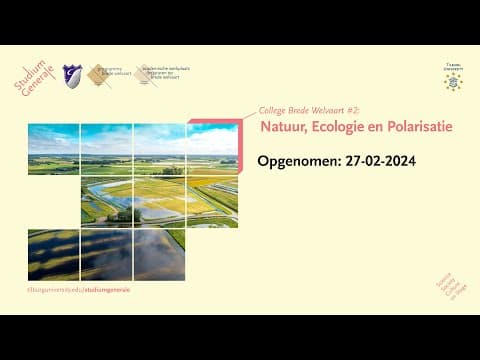
This blog post discusses the complexities of broad prosperity in relation to nature, ecology, and societal polarization, as presented in a lecture series at Tilburg University. It highlights the urgent need for sustainable practices, the role of various stakeholders, and the importance of engaging the youth in ecological education.
The second edition of the public lecture series on broad prosperity, an initiative by Tilburg University, focused on the physical ecological challenges facing the Netherlands and their relationship with broad prosperity. The event was well-attended, indicating a strong interest in the topic.
The previous lecture addressed the political dimension of broad prosperity, reflecting on election outcomes and their implications. This session aimed to delve deeper into the physical ecological challenges, such as the transition to a sustainable energy system and nitrogen emissions, and how these issues contribute to broad prosperity.
The discussion emphasized the need to improve nature quality and reduce nitrogen emissions, which requires significant changes in the physical living environment. This transformation often meets resistance, as seen in recent protests by farmers in Brussels against environmental regulations. The challenge lies in reconciling ecological needs with societal interests, particularly in rural areas where agricultural practices are deeply rooted.
The lecture featured experts from Tilburg University who discussed the interconnectedness of various stakeholders in addressing ecological challenges. It was highlighted that farmers, while crucial to the agricultural sector, are often caught in a web of larger economic and environmental forces. The need for a collective approach that includes all stakeholders—farmers, policymakers, and environmentalists—was emphasized.
Hans Mommaas, a professor at the university, discussed the urgency of integrating economic, social, and ecological perspectives. He pointed out that the current environmental policies often focus narrowly on specific metrics, neglecting the broader implications for society and the environment. A shift towards a more holistic understanding of sustainability is necessary.
The event also addressed the polarization in society regarding environmental issues. Conflicts often arise when different interests clash, particularly between agricultural practices and environmental regulations. The speakers urged for a more constructive dialogue that acknowledges the complexities of these issues rather than resorting to adversarial positions.
A significant point raised during the discussion was the need to engage the youth in ecological education. It was suggested that schools should incorporate more comprehensive ecological studies into their curricula, fostering a sense of responsibility towards nature among younger generations. This engagement is crucial for building a sustainable future.
The lecture series at Tilburg University highlighted the intricate relationship between nature, ecology, and broad prosperity. It underscored the importance of collaboration among various stakeholders and the need for a shift in how ecological issues are perceived and addressed. As society grapples with these challenges, fostering a culture of understanding and cooperation will be essential for achieving sustainable development and ensuring a healthy environment for future generations.



















