
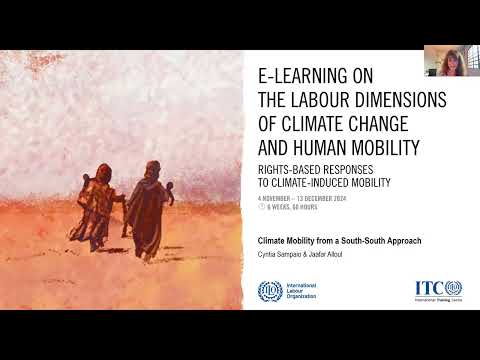
This blog post discusses the emerging practices in climate mobility from a South-South perspective, highlighting the roles of labor migration as an adaptation strategy to climate change, and examining case studies from the Caribbean and Pacific regions.
In recent years, climate mobility has emerged as a critical topic of discussion, particularly in regions most affected by climate change. This blog post summarizes a session focused on climate mobility from a South-South perspective, featuring insights from researchers Cynthia Sampayo and Jafar Alul. The session aimed to explore emerging practices in climate mobility, particularly in the Caribbean and Pacific regions, and to foster an interactive dialogue among participants.
Climate mobility refers to the movement of people due to the impacts of climate change, such as natural disasters, sea-level rise, and changing weather patterns. It has become a significant driver of migration, affecting livelihoods and the ability of families to sustain themselves. The session emphasized that labor migration can serve as an adaptation strategy, helping communities cope with the effects of climate change.
The session introduced the concept of South-South cooperation, which involves partnerships between countries in the Global South to share knowledge and resources. This approach is particularly relevant in addressing climate mobility, as it fosters collaboration and capacity building among affected regions.
South-South cooperation is characterized by:
The researchers presented two case studies that exemplify emerging practices in climate mobility:
The first case discussed was the Falip Union Treaty between Tuvalu and Australia, signed in November 2023. This treaty establishes a migration corridor for Tuvaluan citizens, allowing them to live, study, and work in Australia. Key features include:
The second case focused on Barbuda, which faced significant challenges following Hurricane Irma in 2017. The government proposed a redevelopment plan that prioritized foreign direct investment (FDI) for tourism and property development, raising concerns about land grabbing and the exclusion of local communities from decision-making processes. Key issues included:
The session highlighted several challenges associated with climate mobility and South-South cooperation:
The session concluded with a call for continued dialogue and collaboration among participants to identify and share emerging practices in climate mobility. By fostering South-South cooperation, regions can develop innovative solutions to address the challenges posed by climate change and migration. The insights gained from this session will contribute to a deeper understanding of the complexities surrounding climate mobility and the importance of inclusive, equitable approaches to adaptation.



















