
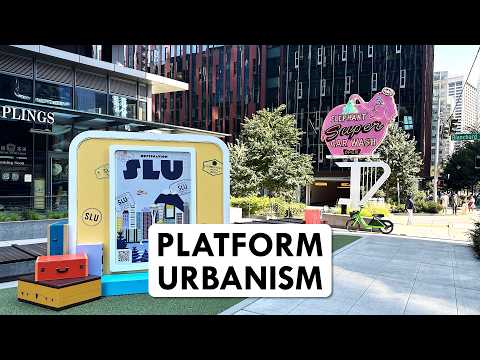
This blog post delves into the transformation of Seattle's South Lake Union into a tech hub, examining the implications of data colonialism, urban planning, and the socio-economic changes that have occurred. It discusses the impact of major tech companies like Amazon and Google, the concept of platform urbanism, and the challenges of equitable urban development.
The campuses of big tech companies are often sprawling endeavors located in suburban settings, but today we turn our attention to the north end of downtown Seattle, specifically South Lake Union, home to Amazon HQ. This blog post will explore the upsides and downsides of transforming South Lake Union into a massive tech hub, alongside some intriguing research that sheds light on the area's development.
South Lake Union is generally defined by its boundaries: Interstate 5 (I5) to the east, State Route 99 to the west, Denny Way to the south, and Lake Union to the north. Historically, this area was characterized by manufacturing and wholesale activities, with limited residential presence. While it is essential to acknowledge the need for growth in a rapidly expanding city like Seattle, we must also consider whether the development has been beneficial to the community as a whole.
In the last decade, South Lake Union has seen significant growth in both housing and income. According to recent census data, the population more than doubled between 2009 and 2018, with median household income experiencing a similar increase. In the past five years alone, the population has risen by an additional 7,000, and median household income has surged by approximately 30%. While this growth may bolster the city's tax base, it raises questions about the implications for existing residents and the overall community.
The corporate presence in South Lake Union has shifted dramatically over the past two decades. While biotech and cancer research have long been part of the area's identity, the influx of tech jobs, particularly from Amazon and Google, has transformed the employment landscape. Amazon's headquarters, often referred to as the epicenter of the tech boom in Seattle, is located just south of Denny Avenue, in an area known as the Denny Triangle.
Despite criticisms of Amazon's business practices, it is noteworthy that the company chose to invest in downtown Seattle rather than a suburban office park. This decision reflects a commitment to urbanism, as evidenced by features like employee bike parking and high-quality micromobility infrastructure. The area boasts a dense network of protected bike lanes and a variety of dockless bikes and scooters, promoting alternative transportation methods.
A significant aspect of the transformation in South Lake Union is the concept of platform urbanism, which examines how digital platforms influence urban design and governance. A paper titled "The Urban Tech Feedback Loop: A Surveillance and Development Data Lock in South Lake Union" discusses how tech companies like Amazon shape urban planning and infrastructure investments.
Data colonialism refers to the process by which governments, NGOs, and corporations take ownership of the vast amounts of data generated by individuals in their daily lives. The paper argues that urban spaces are not merely backdrops for data extraction but are integral to gathering and monetizing this data. For instance, the design of storefronts in South Lake Union favors small boutiques over big box retailers, allowing for more granular data collection on consumer preferences.
While the infrastructure in South Lake Union is impressive, with features like bio-swales and stormwater filtration systems, there are still significant challenges. The area is bounded by heavy car infrastructure, including Interstate 5, which complicates transit options. Although there are private buses connecting tech campuses to other parts of the city, the lack of a light rail stop within South Lake Union limits public transit accessibility.
Transit options in South Lake Union are a mixed bag. The area lacks a direct link light rail stop, and the streetcar operates in mixed traffic, often leading to delays. The King County Metro's Route 8, known locally as the "late Eight," has become infamous for its poor performance, prompting community events to highlight its inefficiencies.
Despite the improvements in South Lake Union, the benefits have not been equitably distributed. The concept of predatory inclusion describes how marginalized communities are included in urban development schemes on extractive terms, often prioritizing wealthier users' preferences. This dynamic is evident in public spaces like Denny Park, where the needs of vulnerable populations are often overlooked.
There is an ironic contrast in how urban spaces are designed for dogs compared to humans. In South Lake Union, significant resources are allocated to dog-related amenities, while public facilities for humans, such as restrooms, are scarce. This raises questions about urban priorities and the need for a more balanced approach to public infrastructure.
In conclusion, while South Lake Union has undergone remarkable transformation, the challenges of equitable urban development remain. The area exemplifies the complexities of modern urban planning, where policies often benefit certain demographics while leaving others behind. As cities continue to grow and evolve, it is crucial to address these disparities to create inclusive and sustainable urban environments for all residents.



















