
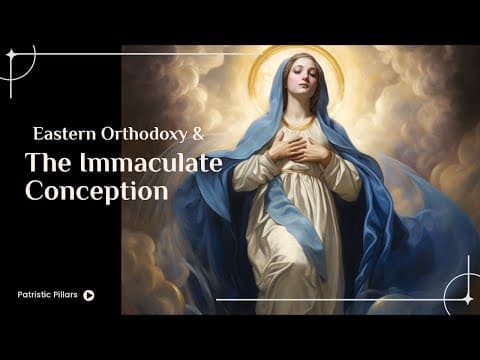
This blog post delves into the Eastern Orthodox perspective on the Immaculate Conception, highlighting the teachings of Gregory of Palamas, Mark of Ephesus, and Gadius Skolarus. It discusses their theological insights, the historical context of their beliefs, and the implications for contemporary Eastern Orthodox thought. The post emphasizes the continuity of these teachings with early Church traditions and calls for a return to the faith of the fathers.
In this concluding part of our series on the Immaculate Conception within Eastern Orthodoxy, we will explore the theological insights of significant figures such as Gregory of Palamas, Mark of Ephesus, and Gadius Skolarus. We aim to demonstrate how these teachings reflect a continuity with early Church traditions and challenge contemporary views that reject the doctrine.
Gregory of Palamas, a prominent saint in Eastern Orthodoxy, provides a foundational perspective on the Immaculate Conception. In his homily on the genealogy of Christ, he emphasizes that while the Virgin Mary came from Adam's flesh, her conception and birth were divinely orchestrated by the Holy Spirit. This divine action cleansed her lineage, preparing her as a pure vessel for the Incarnation of Christ.
Palamas asserts that God's providential action purified Mary's ancestry, ensuring her fitness to bear the sinless Christ. He highlights the election of figures like Noah, who were chosen for their righteousness, as part of a divine plan leading to Mary. This perspective aligns with the Western theological understanding of Mary's unique preservation from original sin, suggesting a progressive purification of her lineage.
Mark of Ephesus, a significant Byzantine theologian and bishop, is best known for his opposition to the unionist efforts at the Council of Florence. His writings reveal a steadfast belief in the Immaculate Conception, affirming Mary's complete sinlessness from the moment of her conception. This belief resonates with earlier Eastern and Western fathers who viewed Mary as uniquely preserved from sin to fulfill her role as Theotokos, the God-bearer.
Mark of Ephesus emphasizes that human logic cannot fully encompass Mary's significance, establishing her as a mystery that transcends the natural order. He describes her as the most supernatural marvel among all creatures, highlighting her unique status as the mother of God. This assertion underscores the necessity of her Immaculate nature, which is essential for bearing the Incarnate Word.
Mark's theological reflections challenge contemporary Eastern Orthodox theologians who reject the doctrine as a Latin innovation. He argues that rejecting the teachings of their great fathers creates a conundrum for Eastern Orthodox believers, as many of their saints upheld the belief in Mary's Immaculate Conception.
Gadius Skolarus, the handpicked successor of Mark of Ephesus, provides further insight into the evolving understanding of Mary's Immaculate nature within Eastern Orthodoxy. His writings reflect an awareness of Western theological developments while maintaining Eastern principles.
In his treatise on the origin of the human soul, Skolarus acknowledges that Mary was born according to the common laws of nature and was not immune to original sin. However, he emphasizes that the grace of God delivered her completely from original sin, allowing her to contribute perfectly pure flesh to the Incarnation of the Divine Word. This unique intervention by God elevates Mary to a state of perfect purity necessary for her role as the mother of God.
Skolarus's acknowledgment of Mary's deliverance from sin ties deeply to the debates of his time, reflecting a nuanced understanding of the Immaculate Conception that resonates with both Eastern and Western traditions. His teachings highlight the universal veneration of Mary as the All-Pure Mother of God, emphasizing her unparalleled role in Salvation history.
The teachings of Gregory of Palamas, Mark of Ephesus, and Gadius Skolarus reveal a rich tradition within Eastern Orthodoxy that affirms the Immaculate Conception. These figures challenge contemporary views that reject this doctrine, calling for a return to the faith of their fathers. As we explore these theological insights, we invite our Eastern Orthodox brothers and sisters to reflect on the continuity of their tradition and the significance of Mary's unique role in Salvation history.
In conclusion, the Immaculate Conception is not merely a Catholic doctrine but a belief deeply rooted in the early Church's veneration of Mary. It is essential for fostering unity among Christians and recognizing the profound mystery of the Virgin Mary's role as the Theotokos. Let us embrace this legacy and continue to explore the depths of mariology together.



















