
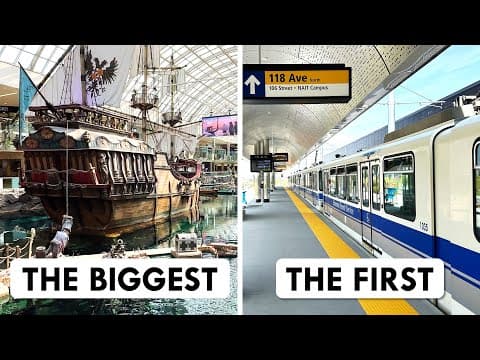
Edmonton, Alberta, showcases a unique blend of urban planning challenges and successes, from its extensive light rail transit system to the vast River Valley parkland. This blog post delves into the city's transportation infrastructure, the iconic West Edmonton Mall, and the ongoing efforts to enhance walkability and bike-friendliness, highlighting the complexities of urbanism in a car-centric culture.
Edmonton, Alberta, is a city characterized by its contrasts. It is home to North America's largest shopping mall, the West Edmonton Mall, and also boasts a pioneering light rail transit system. This blog post will explore the urban planning and transportation landscape of Edmonton, focusing on its unique features and ongoing developments.
Upon arriving in Edmonton, the first challenge is navigating from the airport to downtown. The airport is located far south of the city, requiring travelers to take Route 747 to Century Park, where they must transfer to the light rail transit (LRT) system to reach downtown. The bus service runs every 30 minutes, but I was fortunate to experience minimal wait times. The LRT trains from Century Park typically run every five minutes, making the connection relatively efficient.
Edmonton's LRT system is noteworthy for several reasons. If it were a U.S. city, it would rank third in light rail ridership, behind Los Angeles and San Diego, despite being smaller than those cities. In Canada, Edmonton ranks sixth among metro areas, closely following Ottawa and Calgary.
The LRT system opened in 1978, making it the first modern light rail service in North America. The core of the system features below-grade tracks, enhancing speed and reliability. While some stations retain a retro feel, there are ongoing upgrades, particularly at stations like Commonwealth Stadium, which was renovated in 2022.
The Valley Line, which opened in 2023, runs at grade and features station designs that protect passengers from the elements. The network is expanding, with the West Valley Line currently under construction, which will connect to the West Edmonton Mall, a significant trip generator for retail and entertainment.
The West Edmonton Mall, often referred to as WEM, is a massive retail and entertainment complex. While it may not be the largest mall in North America by floor area, it boasts the highest number of individual storefronts in the Western Hemisphere. The mall's success can be attributed to the vision of local developers in the 1970s, who aimed to create an indoor urban bazaar.
Inside the mall, visitors can find a variety of attractions, including an indoor amusement park, a water park with the world's largest indoor wave pool, and numerous dining options. Despite its size, the mall is designed in a linear fashion, making it more navigable than one might expect.
Beyond the mall, Edmonton is undergoing significant urban development. The Blatchford Market area, once a municipal airport, is being transformed into a new urban neighborhood. This redevelopment reflects the city's aspirations for a more vibrant urban environment.
A highlight of Edmonton is the River Valley, a vast stretch of urban parkland along the North Saskatchewan River. It is claimed to be the largest urban parkland in North America, offering recreational opportunities and serving as a vital ecological space. The city's commitment to preserving this area has been crucial in maintaining local biodiversity and providing residents with a natural escape within the urban landscape.
Edmonton's bike infrastructure is evolving, particularly in the inner neighborhoods. The city has made strides in creating protected bike lanes and improving walkability. While some areas remain car-dependent, the inner neighborhoods offer a more bike-friendly environment.
Despite the progress, Edmonton faces challenges in expanding its bike network. The city has experienced typical urban conflicts over bike lane implementation, with some residents preferring car-centric designs. However, there is a growing recognition of the need for better biking and walking infrastructure, especially in neighborhoods with higher immigrant populations.
Downtown Edmonton features a mix of pedestrian-friendly areas and traditional urban layouts. The Ice District, home to the Edmonton Oilers, exemplifies the tension between the city's oil heritage and its aspirations for a more walkable future. The downtown area lacks freeways, which is a positive aspect, but it still reflects the complexities of urban development in a city rooted in car culture.
Edmonton is a city of contrasts, where the legacy of car-oriented planning coexists with efforts to enhance urbanism through transit, biking, and green spaces. While the West Edmonton Mall may dominate the conversation, the city's neighborhoods and the River Valley offer a glimpse into a more sustainable urban future. As Edmonton continues to evolve, it remains a fascinating case study in the challenges and opportunities facing North American cities today.



















