
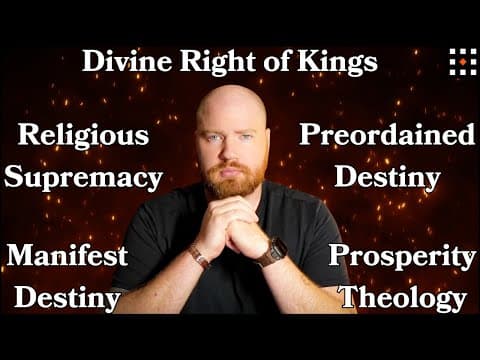
This blog post delves into five harmful ideas rooted in religious doctrine, particularly within Christianity, that have historically justified oppression and continue to affect society today. These concepts include the divine right of kings, manifest destiny, predestination, prosperity theology, and religious supremacy, each illustrating how religious beliefs can lead to social harm and injustice.
Religion has long been a topic of debate, particularly regarding its impact on society. While many find solace and community in their faith, there are undeniable aspects of religious doctrine that have historically justified oppression and cruelty. In this post, we will explore five harmful ideas that stem from religious beliefs, particularly within Christianity, and how they continue to echo in modern society.
The concept of the divine right of kings posits that monarchs are appointed by God and thus cannot be questioned. This idea creates a moral buffer around rulers, allowing them to act without accountability to their subjects. The belief that questioning a king is tantamount to questioning God has led to tyranny and oppression throughout history.
Biblical verses such as Romans 13:1 state, "Let every person be subject to the governing authorities, for there is no authority except from God." This notion has historically sustained monarchies and feudal hierarchies, suppressing democratic movements and reform. Even today, some leaders claim divine appointment, echoing this harmful doctrine.
Manifest destiny is the belief that a particular group is divinely ordained to possess land belonging to others. This idea was notably prevalent in 19th-century America, where it justified the westward expansion and the atrocities committed against Indigenous peoples. The merging of nationalism with theology led to wars, genocide, and forced assimilation.
Scriptural references such as Genesis 1:28, which commands humanity to "subdue" the earth, have been used to justify these actions. The belief that God grants land to specific people has fueled conflicts throughout history and continues to manifest in modern geopolitical struggles.
Predestination, particularly associated with Calvinism, asserts that individuals are either chosen for salvation or damned, negating the concept of free will. This doctrine leads to fatalism and a judgmental attitude towards those deemed non-elect. Biblical passages like Romans 9:15-18 emphasize that mercy is granted based on God's will, not human action.
This belief can create a harmful social dynamic where individuals feel superior due to their perceived election, while others are viewed as worthless. The implications of predestination extend to parenting and social success, fostering a culture of judgment and exclusion.
Prosperity theology promotes the idea that faithfulness to God results in material wealth and success. This modern doctrine, often associated with televangelists and mega-churches, suggests that poverty and misfortune are signs of a lack of faith. Verses like Malachi 3:10 encourage believers to give financially to receive divine blessings in return.
This predatory theology exploits vulnerable individuals, encouraging them to donate money in hopes of receiving miraculous financial or health benefits. The pressure to give during times of personal crisis can lead to devastating consequences for those already struggling.
Religious supremacy is the belief that one's faith is the only true path to salvation, leading to the dehumanization of others. This exclusivity fosters intolerance and violence, as seen in historical events like the Crusades and the Inquisition. Verses such as John 14:6, which claims that no one comes to the Father except through Jesus, reinforce this harmful mindset.
The consequences of religious supremacy are profound, leading to persecution, war, and a lack of empathy for those outside one's faith. This doctrine not only stifles dialogue but also justifies violence in the name of spreading or defending the truth.
The exploration of these five harmful ideas reveals the darker side of religious doctrine and its potential to cause societal harm. From the divine right of kings to religious supremacy, these concepts have justified oppression and violence throughout history and continue to resonate today. As we reflect on these issues, it is crucial to foster dialogue and understanding, challenging harmful beliefs while promoting compassion and empathy in our communities.
Thank you for engaging with this exploration of religious harms. Your thoughts and feedback are invaluable as we continue to discuss these important topics.



















